The ambition to be human

Standard

“It comes to this,” Tarrou said almost casually; “what interests me is learning how to become a saint.”

“Perhaps,” the doctor answered. “But, you know, I feel more fellowship with the defeated than with saints. Heroism and sanctity don’t really appeal to me, I imagine. What interests me is being a man.”

“Yes, we’re both after the same thing, but I’m less ambitious.”

– The Plague by Albert Camus

As promised to one brother I am returning this week to a less heavy-going, non-political, more happy-go-lightly post. This will probably disappoint my other brother but hey ho, you can’t keep all of the people happy all of the time.

This week in book club we were discussing Slaughterhouse Five by Kurt Vonnegut, which led to a discussion about post traumatic stress disorder and then about why some people care more about certain things than others.

There was general acceptance amongst the group, perhaps more readily by some than others, that to shut oneself off from the traumas of the world is an essential human coping mechanism.

I agree it simply isn’t possible to constantly feel for all the tragedies that are enacted out across the globe at any given time. Right now, current tragedies include the two Malaysian passenger air line disasters: one missing one shot down; the Air Algerian plane crash; the situation in Syria; the fact that there are now estimated to be more refugees than at any other time in history; the situation in Gaza; the rise of Boko Haram and the missing schoolgirls abducted in Nigeria; travesties of democracy in Cambodia; and Isis’s latest announcement that FGM will be mandatory. And this is just the tip of the iceberg.

There are simply too many awful things for us to focus on at any one time, even if we wanted to, and so we don’t.(Perhaps this post isn’t quite so happy-go-lucky as I had intended after all – sorry bro.)

One book clubber asked does it take a crisis to make us care? Certainly when a crisis takes place many people are great at demonstrating that they do care. When I was a student I worked at a call centre, which often volunteered to man donation phone lines in response to global disasters or for Comic Relief. I took donations from a wide range of individuals, from all walks of life, many of whom giving sums they couldn’t really afford precisely because they did care about what was happening and wanted to help. So people really are wonderful.

And some people dedicate their lives to making the world a better place for others, providing their time, money or skills for the benefit of others. These people are exceptional. These people are saints.

But it doesn’t make the rest of us bad people because we don’t dwell on these things all the time. Yes, there are many terrible things that happen but there are also many wonderful things that happen too and it is important, at times, to hold onto the horror and the beauty. But being able to enjoy life at the same moment in time that someone elsewhere isn’t enjoying life doesn’t make us the antithesis of saints. It makes us human.

If you are a dedicated fan of my blog (a.k.a. my mother) you will be aware that I called the blog fearofthereaper and started all this as part of an ongoing evaluation of how my life is progressing. More often than not my focus tends to be on positive things I have achieved to become the person I want to be, but it is also important to reflect, from time-to-time, on the things I’m less proud of and on the kind of person I do not want to be.

I do not have the ambition to be a saint, I do have the ambition to be a human. Like so many things in my life, this is something I have the power to realise.

Let me give you a recent example: I had just moved to a new area in Geneva, my French was worse than it is now (which still borders on Yoda-like gibberish) and I was walking to the nearest shopping centre when I walked past an elderly woman who called out to me in French.

Thoughts that ran through my head went something like this: oh no, a human being wants to interact with me and I’m not in the mood, she probably wants something of me that I don’t want to give, she might be selling magazine subscriptions, my language skills are so bad I probably won’t understand anyway, someone else is bound to help, not my responsibility.

And I carried on walking. After about 10 metres I turned to look back, saw no-one else had stopped but walked on a bit further. But then it hit me that I didn’t want to be the kind of person that would just ignore someone calling out to them and so I stopped pretending not to hear and turned around and walked back.

I understood enough French to feel guilty when she thanked me for coming to help her (guilty for not stopping straight away) and to understand what she wanted, which turned out to be directions to a place I didn’t know. So it turned out I couldn’t help her but I did wait until we could find someone who could at least speak to her intelligibly in her language and I did, eventually, try.

I believe all humans are capable of both wonderful and terrible things and the capacity for good and let’s not say evil but instead let’s say less-good is something that resides within all of us all of the time.

How much we are influenced by the good over the less-good depends on a lot of factors: what’s going on in our lives, how we are feeling, how others are treating us and so on. Often we can’t control these factors but we can control how we respond. This I think is what it means to be human, if we take being human as deciding to be the best version of ourselves that we can be.


Not seven reasons to hate the European Court of Human Rights

Standard

Apologies in advance to anyone not from Europe, not interested in politics or with aspirations of wielding absolute power over all minions of the world. This may not be for you. But, don’t worry, you wont be breaching my human rights if you don’t continue reading (although you may miss out on some truly epic artwork)!

This week the UK PM reshuffled his Cabinet in a clear move to the right as the Conservatives begin the countdown to the next election and make a determined bid to win back UKIP voters.

It’s not all bad – there are some promotions to be applauded, increasing numbers of women in the cabinet can only be a good thing (if we steer clear of the argument about whether they are being promoted because they are women or because they can do the job – the two are not mutually exclusive!). Some demotions are to be applauded, I doubt many are mourning the loss of Gove from the role of Education Secretary, others, however, are a bit more worrying.

I may not have seen eye-to-eye with them on everything but I did have a certain respect for Ken Clarke, Damian Green and Dominic Grieve, all of whom were axed in the reshuffle. These previously senior government staffers were all strong supporters of the European Convention on Human Rights (ECHR) and weren’t afraid to stand up for this, although that fearlessness might just have got them fired.

There have already been speculation that the reshuffle and removal of these rights loving stalwarts is preparing the ground for UK fisticuffs at dawn with the ECHR and the Court that upholds it. But before anti-Court mania kicks in I just want to set out my response to seven common arguments leveled against human rights legislation.

1. Why should we be governed by Europe?

Governed by EuropeFirst things first the ECHR is not a document of the European Union although signing up to the ECHR is now a pre-requirement for countries seeking to join the EU. But opting out of the EU doesn’t necessarily mean opting out of the ECHR (Turkey and Russia and other non-EU states are currently under the jurisdiction of the Court)

Secondly, the Court doesn’t govern Europe it just gives effect to the ECHR, which incidentally was predominantly drafted by the British, if that matters.

Those who make judgements in Strasbourg aren’t accountable to democratically elected politicians but neither are those who make judgements in the UK. This is a good thing as separation of powers adds a bit of balance to these things.

Finally, the Court only has jurisdiction over human rights related issues – it doesn’t determine things like working hours, how fast we drive or when we can retire. The EU has some say over some of these things but that’s a different topic.

2. We don’t need the ECHR, we have the Human Rights Act

Don't need ECHR have HRA!The HRA is the incorporation of the ECHR into domestic law. This has meant that the UK has been able to much more easily consider human rights issues without the delays or expense incurred in sending a case to the Court.

However, it doesn’t replace the ECHR. There are still circumstances where UK individuals can appeal to the Court when it thinks the UK isn’t abiding by the HRA and ECHR. Governments don’t always act in the best interest of the people and its actually quite reassuring to think we have an added layer of protection from potential human rights violations inflicted by the state.

Finally, the HRA has been under attack by the Conservative party for much longer than the ECHR. To assume the HRA will remain unscathed if the UK withdraws from the ECHR is naïve.

3. Human Rights aren’t an issue in the UK so why do we need this?

No human rights issues in the UKt 4.00.56 PMActually human rights are still an issue in the UK. For example, estimated numbers of slavery in the UK are higher now than when slavery was legal.

And things like the government wanting to be able to listen to all your phone calls, read your emails and look at all your photos on Facebook is an invasion of privacy, which is another human rights issue that probably affects all of us.

Also, although we might be living in a comparatively free environment now, and I’m not denying that the UK has a better human rights record than a lot of other places, we shouldn’t just take this for granted and assume this will always be the case. Keeping some safeguards in case things go down the pan in the future isn’t a bad idea.

4. The ECHR is abused by petty individuals, terrorists and time wasters so we should get rid of it. Why aren’t my rights protected?

Terrorists, time-wasters and petty individualsThe ECHR isn’t just used by people we don’t like, it just tends to be that tabloids can use these cases more easily to create shock headlines that will sell more papers so we tend to be a bit more aware of these sorts of cases.

Your rights are protected. Its just some of these rights we share with people we might not like very much. The ECHR doesn’t cover things like the right to lead a happy existence with the right that people should bring you chocolate cupcakes every day. It covers things like right to education and right to protection of life.

Being able to file a claim at the Court doesn’t necessarily mean that it will go to Court or that the UK will lose. Cases will only be accepted where applicants can show they have tried to go through the domestic system – giving UK courts a chance to weigh in – and where the case has some merit. So, for example, someone could file a claim about a little girl picking their flowers and breaching their human right to enjoy flowers (actually not a human right) but that kind of thing isn’t going to be considered.

5. People who commit crimes abuse the rights of others so should lose their rights.

Human not human?The ECHR applies to all humans and yes this does sometimes include people we don’t necessarily like very much but I think getting into an argument about who is human and qualifies for rights and who doesn’t is dangerous territory best avoided by all people who don’t have a God complex.

Also certain rights, like the right to liberty, are negotiable so if you commit a crime the State can remove this right and lock you up. Others, like the right to prohibition of torture, are non negotiable so committing a crime doesn’t mean the State can pull out your fingernails. It’s hard to argue against this.

6. Yeah, but what about Prisoner voting rights, how can you defend that one, eh?

Prisoner votingThis is one of the most misrepresented issues of Court madness that I can think of. I watched debates in parliament where MP after MP stood up and led their argument with something like: ‘there’s a murderer/rapist/paedophile/indefensible individual who hurt someone/lives in my constituency – these people shouldn’t be allowed to vote.’ That’s not an unreasonable sentiment for someone to have. However, the judgement from the Court at no point said that the UK must make voting rights available to all prisoners. It just said the UK should review the blanket ban that applies to everyone in prison.

So, no, the UK doesn’t have to give murderers the vote but perhaps it could consider giving someone imprisoned for 6 months for minor drug trafficking the opportunity to have a say in and engage with the running of the society they will be returning to on release. Or if this example is too extreme for you how about the pensioner who was imprisoned for less than a month for refusing to pay his council tax in protest against council cuts in his area. Would giving someone like that the vote really be the end of society as we know it?

Still not convinced? Well how about this argument: whether or not you agree with the Court’s judgement on prisoner voting can you accept that picking and choosing which court judgements the UK decides to abide by sets a bad example to other nations subject to the Court’s jurisdiction? The UK might not like prisoner voting and decides not to listen to the Court. Turkey might look at the UK’s example and think well we don’t like not being able to torture people so we wont listen to judgements about this either. Russia might then look at what the UK and Turkey are doing and think why should we care if the Court says we can’t arbitrarily imprison people? And so on.

7. Well, what about that thing about the cat and the dodgy immigrant being allowed to stay here?

Magic kitty passportAnother human rights misrepresentation. Theresa May might be the Home Secretary with a team of advisors who you would think would know better but when she said ‘and I’m not making this up the immigrant who could stay in the UK because he had a cat’, well, actually, she was making it up.

What happened is that an immigrant who was claiming the right to stay in the UK based on his family life mentioned that he had a cat. The decision that he was allowed to stay here wasn’t decided by the fact he had a cat. The immigrant could also have mentioned that he really liked Dairy Milk chocolate. The decision would have been similarly unaffected by the fact he liked British chocolate.

That immigrant’s having a cat didn’t give him the right to stay, in the same way that having a cat doesn’t give you special entitlements to live in a nice flat, have a great job and be able to buy Dairy Milk whenever you want. You might well live in a nice flat, have a great job, be able to buy Dairy Milk whenever you want and have a cat but having the cat probably hasn’t been the cause of all that.

In conclusion

Do feel free to dispute anything I’ve said above and if you can think of other arguments against the Court throw them at me and I’ll see if I can come up with a suitable response/wonderful piece of art.

But I feel happier in the knowledge that there is an additional safety net that can protect my rights against the interests of the State, should they be under threat.

What the ECHR covers (full text here) is listed below and I can’t find anything there I’d rather not have protected:

  • Obligation to respect human rights
  • Right to life
  • Prohibition of torture
  • Prohibition of slavery and forced labour
  • Right to liberty and security
  • Right to a fair trial
  • No punishment without law
  • Right to respect for private and family life
  • Freedom of thought, conscience and religion
  • Freedom of expression
  • Freedom of assembly and association
  • Right to marry
  • Right to an effective remedy
  • Prohibition of discrimination
  • Derogation in times of emergency (flexibility for States when required – but not applicable to all rights)


Is the world mad or is it just me?

Standard
I’m sure we have all had moments of shocked incredulity at a situation seemingly accepted by others but which seems totally incomprehensible to ourselves. But the acceptance of others might ask us to question whether this really is a mad situation or whether it is in fact us. When confronted with this madness what do we do: do we protest in the bewildered face of others or simply keep our heads down and wonder in silence?
This is a bit different to my usual postings (if after two months of blogging you’ve identified a trend) and it’s not really about me but is inspired by three men unable to accept the madness of the world around them and in protesting this perceived insanity earned the ridicule of others.
This week, whilst undertaking a spot of filing, I came across a number of letters from a Mr Garry Davis. He was a very public and active promoter of his cause, that died around this time last year, so I think it’s okay to reference him by name.

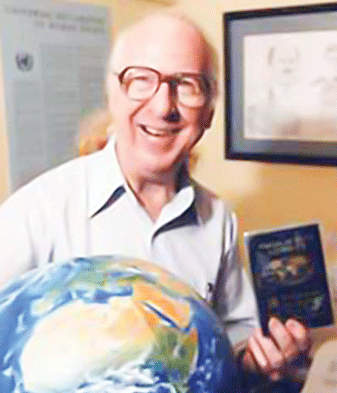
Mr Garry Davis

At first glimpse I thought these are just the ramblings of your average fruitloop. There was an excessive use of capitalization and exclamation marks, which I tend to interpret as a mark of crazy. (Let me just re-type that last sentence and you’ll see what I mean. There was an EXCESSIVE use of CAPITALIZATION and exclamation marks, which I tend to INTERPRET as a mark of CRAZY!!!!!)
But then I started to read his correspondence more carefully and did a bit of research (for ‘research’ read ‘I Googled him’) and what I discovered wasn’t as mad as I had first thought. In a nutshell Mr Davis was an American World War 2 veteran who, disgusted by the senseless killing he himself participated in, decided to renounce his US citizenship and declare himself a citizen of the world. He believed that lasting peace could only be obtained if nationhood and the accompanying violence of territorial wars ceased to exist.
Mr Davis was committed to his cause for which he was arrested, deported and probably subjected to more assumptions of crazy than just mine up until his death at the age of 91. He promoted world citizenship and produced world passports in the belief that there should be no borders and people should be free to come and go as they pleased. For many stateless refugees he was an inspiration and to this day the One World Vision has many hundreds of thousands of followers. He was a man committed to his visions in a world that didn’t want to listen to him.
Will there ever come a time a century or two from now when all the world citizens, devoid of nationality, look back at this part of history and question why everyone else was so happy to accept what is patently a very bizarre set-up in the form of statehood?

Mr Brian Haw

Next on my list of uncompromising protestors is Mr Brian Haw. I used to work at Parliament and as someone frequently subjected to the torrent of words spilling forth from Mr Haw’s megaphone it was easy to dismiss him as a nutter and nothing more than a nuisance.
In 2001 he set up camp on Parliament Square in London protesting against US and UK foreign policy in relation to the situation in Iraq. Parliament tried to get rid of him by enacting new legislation to prevent permanent protests in that area, but as Mr Haw’s protest was ongoing and established prior to legislation he became the only person legitimately entitled to camp outside Parliament. And camp there he did, through all weather extremes, until his death in 2011.
Mr Haw claimed he was protesting for a better future for his children. That’s probably not the only reason behind his actions and how happy his children, who he left behind to undertake the protest, were with this argument is another matter. But if Mr Haw genuinely believed his protest was the only means he had at his disposal to ensure a better future for his children, that it wasn’t possible for him to be quiet and accept the reality of war, was he really as mad as so many dismissed him to be?

Mr Siegfried Sassoon

Finally I come to my last of those champions of lost causes and my personal favourite: Mr Siegfried Sassoon. Siegfried Sassoon real life fox-hunter, poet and Great War Veteran reached a point when he could no longer not protest at the futility of war and the waste of life he saw all around him. Knowing full well the futility of his actions he threw away his medals and wrote a letter to a national newspaper protesting against the war. His actions earned him a spell in a mental hospital for shell-shocked officers.
(Regeneration by Pat Barker is a great book that blends history and fiction in exploring the madness of war and will tell this part of Sassoon’s story better than I can.)
In the mental hospital Sassoon encountered Wilfred Owen and encouraged him to express more forcefully the horrors of war in his poetry. So he may have failed to stop the madness of war but at least through his own poetry and through the encouragement of better-known Great War poet Owen, he managed to communicate the madness to others despite the heavy censorship both poets were subjected to. (Interesting piece on BBC news about censorship of Sassoon here)
Whilst the wastefulness of young lives during the Great War is now widely accepted, at the time Sassoon’s protest was not. Far easier to dismiss him as mad than accept the truth of what he had to say. Time has vindicated Mr Sassoon and perhaps it will also vindicate Mr Davis and Mr Haw in the future? Undoubtedly there will be many things we accept now that future generations will consider utter madness.

The arrival of the fiancé!

Standard
Being deeply loved by someone gives you strength, while loving someone deeply gives you courage.’ – Lao Tzu.
On Wednesday my fiancé came to Geneva. Not for a visit but to live. This isn’t a post about how my life is all sunshine and roses now that he’s here. Neither is it a post about mourning for the end of my Swiss bachelerotte days. If anything this post is a bit of a shoulder shrug to whatever it is I’m supposed to feel about all this.
I’m afraid I am not of the ‘You’re Nobody til Somebody Loves You’ philosophy (sorry Dean Martin). Nor do I believe that my fiancé completes me or that my life was somehow lacking until I met him. Don’t get me wrong having him to share my life with is great and he complements me in a way that has enriched my life, it just hasn’t made it ‘whole’.
What I love most about him (see I’m not so unsentimental I can’t use that word) is that he endorses the idea that it’s alright being me, because I’m alright as I am actually. I’m not a puzzle missing half the pieces that he gets to transform into the full picture.
And with the fiancé and the cats and the unpacked belongings in the new flat Geneva is starting to feel a bit more normal. But that feeling of normality is strange in itself. I’ve been here for over four months now but up until now it hasn’t really felt like I’ve lived here. I’ve worked, I’ve explored, I’ve tried new things and met new people but it has all felt a bit transitory. Now that he’s arrived the Geneva adventure has taken on more of a realistic tinge and has become that bit more ordinary.
People keep telling me it must be wonderful and so much better now he’s here. And it is but, if I’m honest, it is also going to take a bit of getting used to. I’ve had a fair few visitors since I’ve been here so I’m used to giving people my undivided attention and a glimpse of Geneva living. I’m also used to them going home after a few days. What I’m not used to is the constant presence of someone else sharing my life with me. Or more precisely this is what I’m no longer used to.
Screen Shot 2014-07-04 at 2.22.17 PMMe and the fella have been together for quite some time (seven years and counting). We’ve worked together, got cats together, lived together, been on holidays together, grown together and even managed to get engaged. It’s not like I’m not used to him its just that for the last four months we’ve been living completely separate existences that we’ve talked to each other about but haven’t shared in the same way.
He’s had to deal with all the realities of our upping sticks and moving to Geneva as I left in a bit of a flash and wasn’t able to help much in the wrapping up of our UK life. He had to move back in his with parents, sort the flat out for renters, notify relevant people/companies/etc. about leaving the country and finish up at work. I’ve had to carve out a new life for myself here, find a flat, find my way around, work out how the public transport works!
This rather special human being has enough faith in me to uproot his life entirely to take a chance on Geneva living with me. That’s a truly wonderful thing, it’s also pretty terrifying. It’s one thing taking chances and trying new challenges that just affect me, it’s quite another taking chances and trying new challenges with the responsibility that if it all goes pear-shaped it wont just be me that suffers the consequences.
Over the course of the seven plus years we’ve been together. We haven’t completed one another but have come to know each other well enough that we can both derive strength from the relationship and have courage to face challenges knowing that we’ve got a bit of reliable back-up in our corner.
He’s pretty good at encouraging me and giving me strength at those times when I’ve wanted to give up and go home. Also he has a marvelous ability to helpfully point out that we can’t go home as someone else lives there now.
Ultimately if Geneva turns out to be a massive disaster that will be on my head, although I can trust that he wont rub it in too much, but without him I don’t know if I’d have had the courage to try.