The “World Cup We”

Standard
I wouldn’t ordinarily describe myself as a football fan but growing up in a football friendly household has given me an appreciation of the game, the enjoyment of a live match and an understanding of the offside rule.
I did pick out a team to follow when I was younger, which was Nottingham Forest. Brian Clough was manager at the time and they weren’t bad but I chose them purely based on the colour of the shirt; red happened to be my favourite colour at that time. Unfortunately I didn’t happen to see one of the other, slightly better and more consistent, teams who play in red such as Manchester United, Liverpool or Arsenal. Perhaps if I had I would have maintained interest in my team and become a dedicated fan. So I’m not a massive football fan. Except when it comes to the World Cup.
However, whenever the World Cup comes along I develop mystical powers that transform me into a football expert. I become confident that I could manage, play and analyse the game better than anyone else. This is in spite of knowing less than half the names of my team’s players at the start of the tournament. But my familiarity with names increases the more I watch as does my telepathic connection with the players, which gradually merges into a sort of collective consciousness. And so, the “World Cup We” is born.
Here are some examples: “We played really well overall, but just couldn’t get the ball in the net often enough.” “Our defence was lacklustre and so we let them score.” “Our hopes of going through now depend almost entirely on the actions of others.” If you hadn’t already guessed, yes, I am an England supporter.
But this is not a strange phenomenon that only affects me, almost everyone following the tournament with a team in contention does this. I work at an international organisation and so there has been a lot of banter and bandying of the “World Cup We” about the corridors and communal spaces as colleagues take it in turns to encourage, celebrate with, or, far more frequently, mock one another.
I hadn’t even thought about the strangeness of the “World Cup We” until it was pointed out to me. I watched the Holland v Australia game with a couple of Dutch friends and when I congratulated one of them on “their” win she laughed at me and said she had nothing to do with it and I’ve been thinking about it ever since then.
And it is strange that millions of otherwise disunited people, with nothing in common apart from a certain pocket of the globe they have some kind of link to, somehow unite into an ant-like communal consciousness, whose very sense of well-being rises and falls with the success of 11 men on a field.
So how does this even happen? I guess the obvious answer is that, for most of us unable to actually play and win the competition ourselves our only alternative is to tap into the ability of those representing our country and live vicariously through them. We are riding on their coattails, for better or for worse, and are often dragged along the muddy football pitch in their wake.
The other collective “We” on a grand scale, with which most Brits our familiar, is the “Royal We”. I don’t know exactly why the “royal We” is used but I suppose it is to signify the Queen speaks not only for herself but also for her subjects. In a similar vein, I, along with my national unit of course, use the “World Cup We” for the same purpose to express contestations, congratulations, and commiserations on behalf of all England footballers and supporters across the globe.
The pull of the “World Cup We” is too big to fight and we just need to accept that it is our destiny for the duration of the tournament and beyond to feel the victories and humiliations of our nation’s chosen players. So however “We” fare, “I” shall endure the taunts of my colleagues and hope some day to have my revenge. (Although today I did get a pity pastry from an international rival, which I wasn’t too proud to eat!)
I wonder if my absorption into the “World Cup We” means everyone else has exactly the same questions about why this happens running through their minds right now?

Absence makes the heart grow fonder

Standard
The saying goes: ‘absence makes the heart grows fonder’ but this is only true up to a point. Certainly, absence makes you keenly aware of being apart from those you are fond of, and a return after a relatively short period away makes you appreciate those you have missed all the more intently. Although more often than not this heightened sense of appreciation is only of a limited duration.
However absence over a longer period of time, say for those that up sticks and move away from the job/area/country of those they care for can have a different effect entirely. In time fondness alone can fade away into an affectionate memory of a part of your life that no longer exists.
Just as some friendships will stand the test of time, and you will meet people you know will be there for you no matter how much of a plonker you are at times, some friendships won’t last and absence won’t do these any favours. There is nothing wrong with this. I believe that it’s perfectly natural that you may have bonds with certain people only at certain periods of your life. It takes a lot of time and energy to preserve relationships and for most people it just isn’t feasible to keep up every friendship that has been acquired.
But absence can also take fondness and transform this into something far more substantial. After university it was the very absence of one person I had known there, who went to work abroad for a couple of years, that really established our relationship. Before she left I liked her but didn’t know her very well, by the time she returned our friendship had transformed into something solid, which is still strong some eight years down the line.
Whilst she was away we took on the seemingly now old fashioned approach of communicating through letter writing. What sounds like a distant means of staying in touch was the most liberating correspondence I have ever had. Sitting down and taking the time to think about and write a letter but not worrying about the immediacy of a response, and with someone I knew but initially wasn’t emotionally invested in, meant that I felt free to really open up and expose a very honest side of myself. What could have taken years in a more naturally evolving friendship began to take shape in about six months. Absence in that instance took mere fondness and transformed it into a long-lasting friendship.

buttons write

I haven’t been an expat long, only a few months to date, but knowing that this is a longer term move for me, likely to last a couple of years if not longer, has made me very aware of those that I have left behind. Facebook is great for being able to keep in touch with lots of people and share details of your life and take in aspects of theirs, but it can be too easy to rely on this and think that because you have kept up with a few snippets of people’s lives that this is the same meaningful connection that may have led you to add each other as Facebook friends in the first place.
Now that I know friends and family aren’t just a quick bus or train ride away, even if I didn’t actually make those journeys all that often, for the first time in years I’m consciously working on keeping these relationships going because I’ve realised I don’t just want them to fade away into distant memories.
I’m calling people far more frequently than I ever did in the UK and I’m making greater efforts to meet up with people in person in Switzerland, the UK or somewhere in between. Now that it has become harder to stay in touch, my efforts to do so have multiplied to meet the challenge.
If nothing else my little adventure in Switzerland has made my heart grow fonder and has energised me to realise that, like with so many other aspects of my life, my friendships are worth working at. If I want to keep relationships with friends strong (family too, but they kind of have to be there so it’s a bit different) I can’t just sit back and expect these to flourish all on their own. If I don’t keep them going, and my friends are similarly content to sit back and simply assume we’ll stay in touch, then we will drift apart due to the sorry excuse of just not making an effort.
My whole fear of the reaper philosophy has been great at motivating me to take on new challenges and to try things that scare me on a sliding scale from slightly intimidating to down-right terrifying. But I wouldn’t want this motivation to keep on moving forward to come at the cost of losing sight of the valuable things I have acquired in the past.
Just as what I achieve, or at least have a go at, each year is down to me so too is the art of maintaining bonds with those I care about. Obviously friendships do require an effort on the part of those I want to be friends with, or at least a weary resignation, but this doesn’t mean I can shirk my responsibilities in this regard and nor would I want to.

The forlornest looking lampshade

Standard
I’m writing this post in all it’s gory details to be honest that living life in fear of the reaper isn’t always easy. The toughest challenges aren’t easy, they can be quite scary and the lack of neon lights announcing ‘this is the right thing to do’ often leaves me with unanswered questions.
This week, my 15th in Geneva, has been the hardest since I’ve been here. For the first time I have really questioned what it is I am doing here and wished I were back in London.
I’ve felt it even more because I had such a great weekend, spent with the lovely Dawn visiting from the UK. Weather was amazing and it was the 20th anniversary of Geneva’s joining the Swiss confederation. There was a parade with amazing outfits, stupendous horns, and maypole dancers. There were free concerts including yodelling, electric jazz rock and hip-hop rap with a surprisingly good beat-boxer. I felt lucky to live in this beautiful city.
OLYMPUS DIGITAL CAMERA
Until Monday.
The downside to having spent the entire weekend outside, lounging around on the grass, enjoying the lovely spring weather was the hayfever. Sneezing constantly on Saturday and Sunday seemed funny but come Monday the joke was wearing thin.
Then the toothache started, with pain so bad it would wake me up, once the pre-sleep painkillers had worn off. Generally I am not a fan of visiting The Dentist (I use capitals to make it seem sinister) but in a country where I barely speak the language and fear a visit will cost me next month’s food allowance that fear is increased somewhat.
My infected tooth led to a painful swollen gland under my jaw. This was quickly followed by an outbreak of impetigo, no doubt hastened on by the excessive sneezing. The good news with the impetigo is I’ve had it before, so already have the required cream and know that it should start to ease up in a few days. The bad news is it looks like I have a snot-encrusted face, which would in fact be pleasanter (feel free to Google). I often get it when I have a cold and it brings me down every time. It’s a vanity thing. Looking like a barnacle encrusted vomitorium makes me feel bad.
So I have allergies, toothache, swollen gland and the facial eruption. Add in mosquito bite aggravated eczema and a dash of diarrhoea and we’re there.
I’ve only just passed my probation at work and I felt uncomfortable having to take two days off work and then a third worked from home. I assume people will think I’m faking it and contemplate innovative ways to fire me (they have to work harder now I’ve passed probation).
I have been feeling incredibly sorry for myself and more so because there was no-one else here to feel sorry for me. I felt very alone in a strange city and wondered what I was doing here. In London I could see a dentist easily without spending a fortune. In London my fiancé would be there to brave the outside world for me, so I don’t have to risk making children cry when going to the shops for remedies. In London I never would have got sick in the first place (alright, that one might be pushing it)!
But as the week wore on I rediscovered that people are amazing. I don’t know why I am constantly surprised when people show acts of kindness, it really happens quite a lot, but every time I am confronted with the goodness within people it awes me.
Work called me on the second day of my illness, not to uncover my fraud but to see if I was alright and if they could help in anyway. My landlord encountered me in my sorry state one evening and told me to call him any time I had any problem, not just flat related. He called me up two days later just to check on me. A new friend I had to cancel drinks on asked what he could do. Little acts of human compassion made being sick in a new place not nearly so frightening or lonely as I had at first thought.
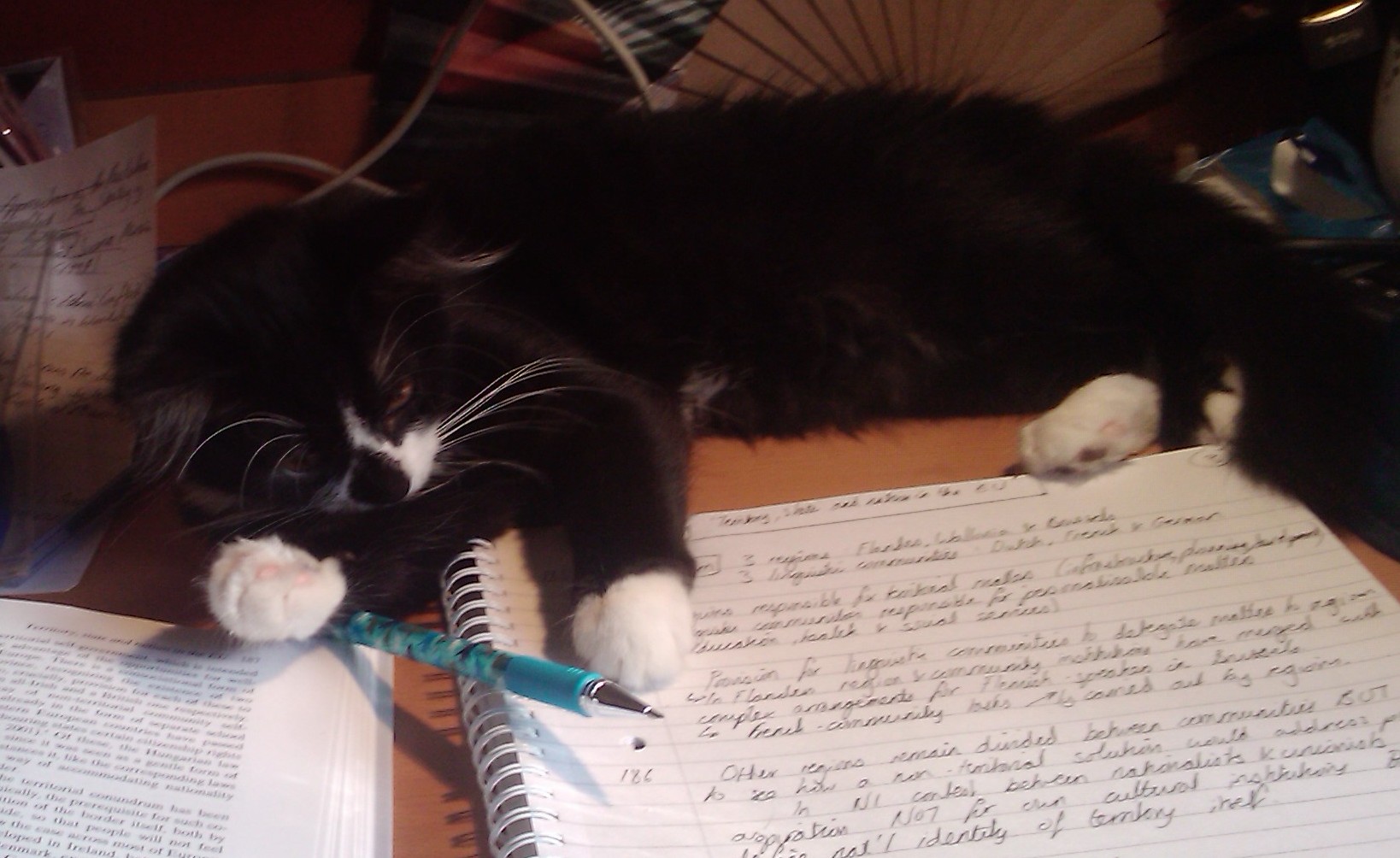
And my lovely cat Jasper, the image of my blog, reminded me of something. No matter how bad you feel someone else, somewhere else is always feeling worse. Jasper had an abscess, I tried to treat him at home, but then he got another one so he had to go to the vet. He had his back leg shaved, a drain put in, multiple stitches and a plastic cone placed around his head. He has become a very forlorn looking lampshade. Poor Jasper has no idea what has happened to him and is utterly miserable. So, it could be worse. I could have been shaved, sewn up and turned into a piece of household furniture.
Whilst I wait for my various ailments to heal up, and I am on the mend, I shall try to remember that you need the lows in life to really appreciate the highs.

Daring to dare (but don’t dare to run a red light)

Standard
“I believe that the most important single thing, beyond discipline and creativity is daring to dare”. In homage to Maya Angelou, who died just yesterday, I’m starting this blog with a truly inspirational quote from this truly inspirational person.
I love that quote and think that daring to dare doesn’t just apply to the big things like travelling the world, quitting your job to write a novel or moving to Hollywood to become a star. Daring to dare encompasses whatever grand dreams you have but also the little challenges that we all face on a daily basis. Those seemingly smaller things, insignificant to many, but daunting to you.
I think the idea of doing things which scare you can often lead to positive results that you never would have foreseen, even when things don’t quite turn out as planned. For example, this week I finally dared to get on my bicycle after having brought it across to Switzerland and then looked at it for three months being too afraid to take it on the road.
Here’s what happened: I went to the shops, I came back. I got a little confused and ended up in the wrong lane when I wanted to turn left. The lights went green but I couldn’t go immediately so carefully watched the traffic on my side waiting for a chance to switch lanes and cross. Unfortunately I failed to register that when the traffic on my side had finally eased up the lights had changed. I was completely oblivious to the fact I was running a red light until I was crossing the road with two lines of traffic coming at me in the other direction.
To add insult to injury I then got pulled over by the police and fined. Upsetting at the time, sure. But actually I am a little proud that I managed to have a conversation in French under stressful circumstances. I got to try out some new phrases such as ‘je suis bête’ (‘I am stupid’) and could give my year of birth without hesitation. So as much as getting fined and almost being run over was rubbish, it wasn’t wholly negative: I got to practice my French, I am now much more safety conscious when cycling and it makes a good story!
Cycling in Switzerland may have been a smaller dare than actually moving to Switzerland but for me it was a dare nonetheless.
The concept of daring to dare wasn’t something I was aware of when I first encountered Maya Angelou. I remember reading Maya Angelou’s I know why the caged bird sings when I was about 15. The first of her autobiographical works is not an easy read, Maya experienced things that no-one should have to, but in spite of all the difficulties she faced she didn’t let these define her but kept on trying.
What I recall most about the book was how bewildered I felt when she finally achieved her goal of becoming a tram conductor, a feat which seemed tremendous as she was the first black person in San Francisco to do this, but then didn’t want to just revel in this. My teenage self, still a strong believer in the fairytale, RomCom perpetuated, ideal of the happy-ever-after just didn’t get it. I thought becoming the bus conductor was her happy ending and at that time found that part of her narrative really hard to understand.
I continued to hold onto this idea of life neatly tying itself up into a perfect state and had this idea that I would reach my happy ending just as soon as I found someone to love/owned my own home/had the perfect job/reached the perfect weight…
But real life, and not the Hollywood illusion, isn’t like that and thank goodness! Imagine how incredibly dull it would be if everything had worked out as I’d imagined at the age of 15 and that by the time I was (almost) 30 I had achieved everything I’d hoped for in life and contentedly spent the rest of my life patting myself on the back. I think the smug satisfaction would have got a little tedious after the first couple of years.
Now I comprehend exactly why Maya Angelou wasn’t happy to be a tram conductor even until the end of the book, because I’m like her. I have a goal, I work to achieve it and then I start looking for something else.
I hadn’t finished my Masters before I’d signed up for Law Diploma, and as that came to an end I applied for an internship in Cambodia. The world isn’t going to stop turning because I achieve something and nor would I want to.
I still want to be learning and trying something new, still daring to dare, until the undertakers come to prise me away from the world of the living. That’s just part of who I am and I plan to keep on challenging myself as I get older, whether this be crocodile wrestling, completing a novel or learning crochet, it doesn’t matter.
As the late Gabriel Garcia Marquez said: “It is not true that people stop pursuing dreams because they grow old, they grow old because they stop pursuing dreams.”

Parlez-vous franglais per favore, mein leiber dich?

All images copyrighted but can be used freely if not for evil purposes and link to fearofthereaper.com is given
Standard
Georg Wilhelm Frederick Hegel had a theory, which, to put very simply, essentially boils down to the notion that it is only through recognition in others of both that which is familiar and that which is different to the self that enables you to be aware of who you are as an individual.
What I have found disconcerting in Geneva is the combined recognition of familiarity and alienness that has highlighted my awareness of being British in a way I have never previously experienced.
On the one hand, life in Geneva isn’t a million miles away from my life in London, geographically and culturally the difference between the two places is not all that great. I go to work Monday-Friday, I go for runs in the evening, I might do my shopping on Saturday or meet friends over the weekend.
On the other hand, there are so many little differences between living in London and Geneva, such as being unable to buy a decent loaf of bread after 7pm or the bureaucracy involved in opening a bank account, that I am constantly being reminded of my otherness.
But the biggest difference here, that factor that makes me feel the most alien, comes from my inability to really speak French. Whilst it is true that there are so many expats here that an awful lot of people speak English, including my entire workplace (collectively they also have an impressive number of other languages tied down), it isn’t true that everyone speaks English.
When I am on a bus, doing my shopping or waiting for the kettle to boil in the kitchen at work and everyone around me is speaking French it’s hard not to feel a sense of isolation and not-belonging.
To be honest, I did not think the language issue would be such a problem. I got an A* in my French GCSE when I was 16 and I thought my French was okay. I knew I wasn’t fluent but thought I was a long way from being a beginner.
But my French, it turns out, is rubbish. And not in a ‘I’m terribly sorry my French fails to meet the highest standards, when actually I can speak in a perfectly intelligible way’ kind of rubbish but in more of a ‘Bobo no French speaky good’ Yoda-gibberish kind of rubbish.
My actual comprehension isn’t that bad but this just makes my inability to find the right words, or any words for that matter, all the more frustrating.
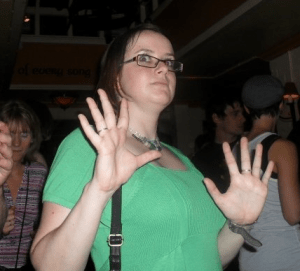
Stop! Don't talk to me! (I don't know what you are saying)

Stop! Don’t talk to me! (I don’t know what you are saying)

Partly I blame the UK education system. When it comes to languages we don’t make much of an effort, with only one hour a week from the age of 11-14 that’s compulsory. I don’t know whether we don’t really try because as a nation we are lazy and think that as so many other people can speak our language we don’t need to bother or we simply lack the confidence to put ourselves out there and really have a go. Whatever the reason, learning languages isn’t taken seriously in the UK and I’m suffering the consequences.
But I also accept responsibility for my own failings and recognise that a large part of my problem is that I don’t like looking stupid (and it’s hard to learn a language without looking a little stupid from time to time). I might have my philosophy that it’s better to try and fail but it’s a much easier philosophy to abide by when you try something and it turns out perfectly first time.
I am trying to remedy the situation. I attend French lessons twice a week, try to listen to French radio and watch a bit of French television. I have started talking to my cats in French.
Yesterday I went to see a great Italian play with French subtitles (Gieuseppe Patroni Griffi’s ‘Gli amanti dei miei amanti sono miei amanti’, which googletranslates as ‘lovers of my lovers are my lovers’, featuring the very talented Nicoletta Zappile – showing in Geneva until 25 May).
But learning a language is not easy and accepting that it will be a slow process doesn’t make it any easier.
I dread my French lessons, being called on when I don’t know the answer and making error after error. I interpret every mistake I make as a personal rebuke and reinforcement of the belief that I cannot do this and I am going to fail. Of course, I pay no attention to what it means when I give the right answer, it’s always easier to focus on the negatives.
It’s hard to stay motivated and keep trying but this is what fear of the reaper is all about (see About this blog and why I called it ‘fear of the reaper’). If every challenge faced was easily solved then it wouldn’t really be a challenge would it?
The satisfaction I hope one day to derive from being able to keep up an interesting French conversation is what keeps me going for now. Although I wouldn’t be disappointed to wake up tomorrow and discover I have become fluent overnight with no effort on my part required at all.
Who knows, maybe I’ll even be able to write an intelligible blog post in French one day?