Dining with the dead

Standard

“The life of the dead is placed in the memory of the living.” Marcus Tullius Cicero

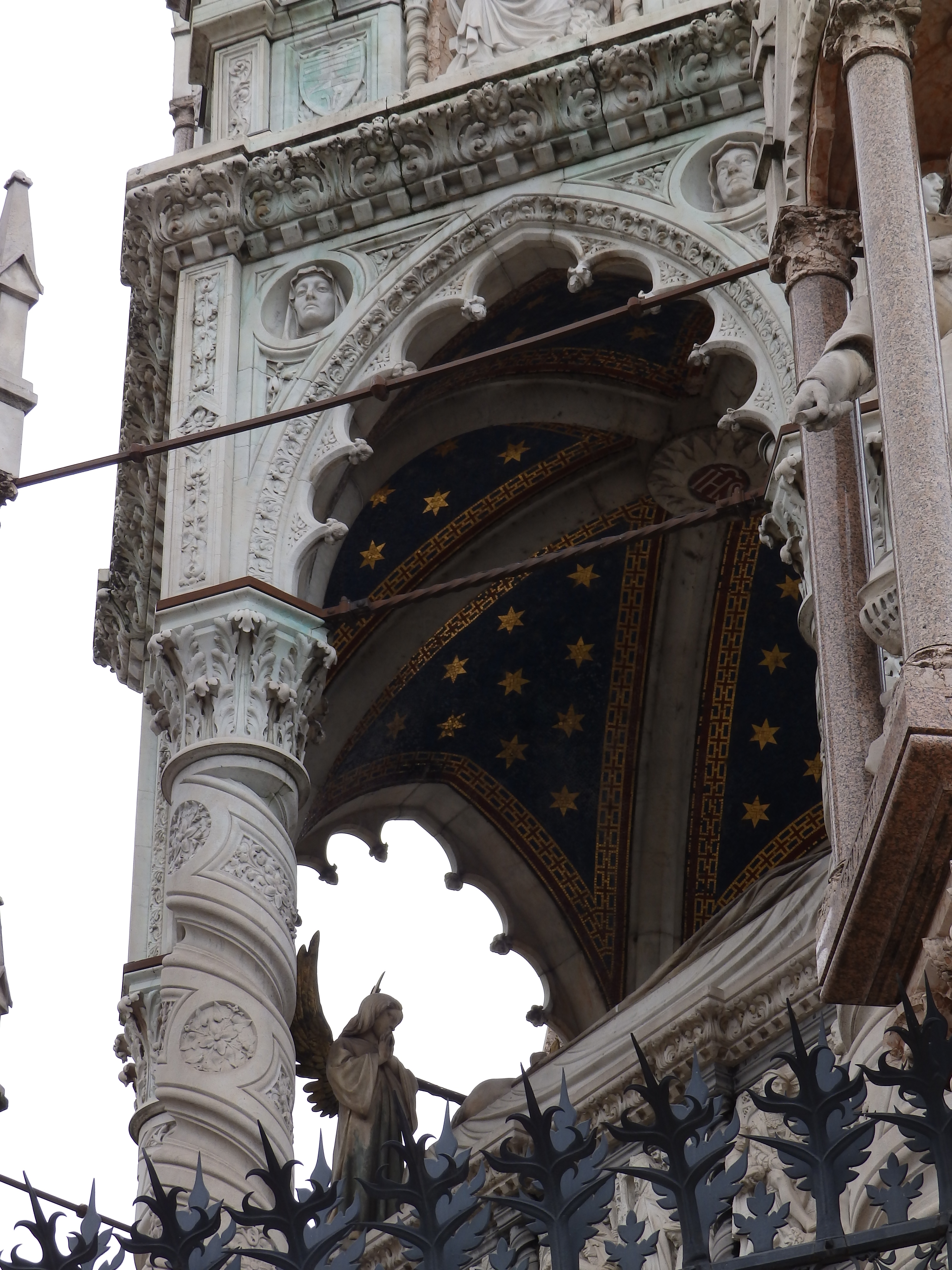
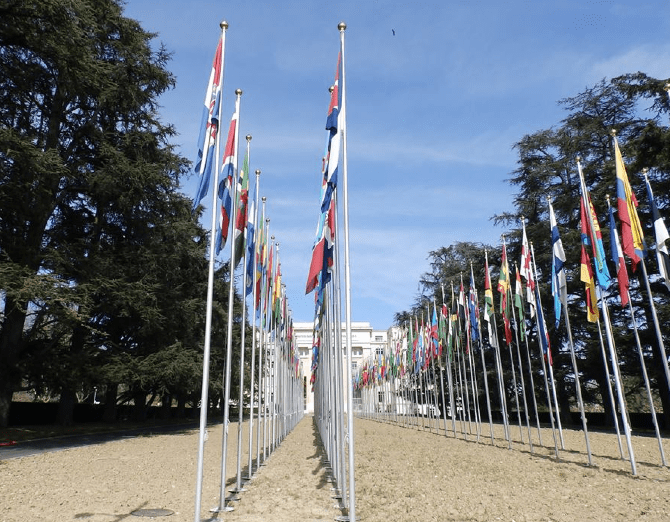
OLYMPUS DIGITAL CAMERALast Sunday I took part in a free walking tour of my new home city, kindly organised by the City of Geneva. This particular walk was focused on Geneva’s parks and gardens and took the group on a meandering tour from the Brunswick Monument on the left bank of the lake across to the newly reopened Musée d’Ethnographie.

One of our last stops was the Plainpalais Cemetery, known locally as Cimetière des Rois (Cemetery of the Kings) in tribute to the notable personages buried there which include John Calvin, figurehead of the 16th century protestant reformation; Jean Luis Borges, famous Argentinian writer; Sofiya Dostoyevsky, daughter of Russian novelist Fyodor Dostoyevsky and many more illustrious personages.

I already knew the cemetery well, as it’s close to my work place, and I had passed through and visited on many an occasion. So when the tour guide told us that in the summer this was a common picnicking spot I didn’t exhibit the surprise of some of my fellow tourists. I had seen that with my own eyes and have in fact consumed lunch in the cemetery on more than one occasion.

When a colleague first took me to eat in the cemetery, on a beautifully sunny October day, she seemed almost apologetic for bringing me there. I think she thought I might find the idea of eating our homemade food amongst the dead as somehow unseemly.

I don’t know why people have an aversion to cemeteries or fear of the dead, which is presumably where the aversion to their resting place comes from. I don’t know if ghosts exist or not but if they do I don’t see that there is any reason to fear them. If there are ghosts then I imagine them to be a sort of reflection or echo of the person they once were and as I have a tendency to believe all people are pretty decent at heart I see no reason to think that their spirits would be any different.

It also seems strange to me the idea that there ought to be a respectful distancing of ourselves from the dead whereby the idea of showing any happiness or joy in these places of death is to be severely condemned, as though the deceased would want us wailing over them forever.

My only negative experience in a graveyard revolved around a primary school incident of trying to raise a particular spirit from their grave, which ended badly in getting me grounded for two weeks for returning home two hours later than I was supposed to (we were waiting for it to get dark).

But the truth is, I have always rather liked cemeteries. I have many fond, and wholly unsqueamish, memories of walking around burial grounds with my parents from an early age. I liked the flowers, the calm and trying to read the inscriptions washed away by time on the oldest tombstones. But mostly I liked reading through the names, the dates of birth and death, the families recorded in the same plot and taking a moment to stop and think about the once living people who now lay beneath the earth.

I think my love of history comes from the same basic root of wanting to find a way to connect with those of the past. To think how their lives may have been, what they may have felt, to imagine myself in their shoes and to wonder if anyone in the future will ever try to connect with an historical version of myself?

I suppose that is also why I have a strong desire to one day write a great novel in the same way others desire to make their mark in film, be renowned for scientific discovery, bring about a revolution or raise a legion of children, grand-children and great-grandchildren. It’s the desire to be remembered and, in recognition of the truth that our lives are but fleeting moments in history, to think that there is a way in which we may continue to live on beyond our allocated time.

OLYMPUS DIGITAL CAMERA

So, I explained to my lunch companion that I felt no compunction in enjoying the autumn sun, eating my sandwiches and relaxing in a cemetery. I think the idea of the living mingling with the dead is somehow a rather comforting thought.

Those of us picnicking in Plainpalais cemetery probably haven’t chosen the spot because we have some sort of morbid fascination with the ghoulish, we have come because it is a pleasant spot to be in. And if, whilst we are there to enjoy ourselves, we take a moment to look at a few stones, to read the names carved upon and to take a moment to think about the people they memorialise then that seems a more honourable way to remember the dead than to keep a ‘respectful’ distance.


An expat among expats

Standard

“Tis better to have loved and lost than never to have loved at all.” – Alfred Lord Tennyson

One of the things I liked when I first came to Geneva was that the city is full of expats from every region of the world. I had the sense that no-one really belonged here but in this communality of not-belonging we all did.

And whilst invariably you would get pockets of certain people from the same country coming together more often than not the groups I would meet would be a real melting pot of different nationalities.

For example the first four friends I made here were Lebanese, Chinese, Dutch and Maltese-Australian. There are about 25 people in my office that represent around 17 different nationalities and you’ll hear a number of different languages floating around the corridors. Coming from my previous job in the UK, primarily made up of white British staff, the cultural mix here was quite new to me but something I warmly embraced.

Events like the World Cup are so much more fun when not everyone around you is rooting for the same team. And I have really enjoyed discovering what experiences and cultural practices are commonly shared amongst this mish-mash of people and what things are unique to each nationality (People in Geneva do have Christmas tree but I was stumped when trying to explain sherbert to a group of co-workers the other day). The office universally shares a love of chocolate but has fun debating which country produces the best or worst chocolate.

I’ve been an expat before when I interned in Cambodia but there we were small in a number and had a tendency to stick together. But being an expat among expats is an entirely different experience with a lot of positives. However, there is a downside as well.

A few months ago I met a chap from abroad who told me that until he and his wife had children they didn’t make any Swiss friends. When I asked him why he explained that with so many people coming and going those that were more permanently based here didn’t want to invest their time in getting to know people who would ultimately leave.

At the time I thought that it was a bit heartless not to make an effort to welcome newcomers into your lives just because they might leave again. But as expat friends of mine have now started to leave or announce upcoming plans for departure I’ve started to understand their thinking. It’s not that they are heartless but rather that its heartbreaking when someone you’ve come to know and care for is going to be gone from your life and possibly never re-enter it.

I’ve always been a selfish creature, for example uprooting the fella and abandoning all UK based friends and family to chase my dreams in Geneva, but it never occurred to me until it started happening to me on a frequent basis how hard it is to be left behind.

A number of people that I’ve met in Geneva that I’ve taken the time to get to know and have gradually forged fledgling friendships with that I thought had the potential to develop into full-on chumminess have announced that they will be leaving in the next few months and I’m honestly gutted.

From a selfish point of view I want everyone to stay and be my friends forever and if I decide to move again for them all to decide to move with me. Is that too much to ask?

I grudgingly accept that not everyone’s lives revolve around me, much as I might like them to, and I understand why certain people are leaving and obviously wish them well in their future adventures. It’s just I feel like someone has grabbed the trunk of a flimsy tree I’d built a nest in and shaken it violently, with the unsettling effect the departure of these people will have just as I was stating to feel comfortable here.

I think it’s good to put yourself out of your comfort zone but it’s harder when other people do this for you. Whilst I know not all my friends are leaving, there will always be constants in my life and that I’ll undoubtedly meet new and interesting people to form new friendships with there’s a part of me that wants to protect myself from future hurt by simply shutting myself off to the opportunity of loving and losing more people.

But then I think, well if I’d done that I’d never have met these wonderful people in the first place. If I hid my heart from other potential friends I’d be letting fear rule my life and that’s against the whole philosophy of what this blog was initially supposed to be about (see ‘The Why’).

So rather than feeling bummed out about the fact that some of my friends will leave I ought to make the most of them whilst they are still here. And it’s quite exciting to think that ten months ago I didn’t know any of them and in another ten months there could be more great people in my life I haven’t even met yet. Plus the further my friends disperse themselves around the world the more excuses I have to go and visit new places. It might be a bit of an emotional rollercoaster but it’s a wonderful world.


To sleep or not to sleep? That is the question

Standard

When I must have been about 3 or 4 I had a set routine: lunch, watch the Wombles and then a little sleep. No complaints with the first two but I really hated nap-time.

My hatred of napping continued as a child and I would always refuse to admit I was tired. If caught with my eyes closed and conscious enough to hear someone say I was asleep, I would fiercely retort ‘I’m awake’ and be angry at the suggestion it could possibly be otherwise!

It wasn’t until I started at University that I began to realise that far from being a bad thing, a little snooze was, actually, rather wonderful. Forget the two hours of seminars a day, cheap drinking and student discount card, University living taught me to appreciate the benefits of a short snooze.

For a time I worked for the Student Union’s technical crew. To be honest, I’ve no idea why they gave me a job as I knew less about technical issues then than I do now. I was probably hired because a) no-one else wanted the job and b) they thought a bit of gender balance might be good (the ratio of male to female staff when I worked there was probably something like 20:2).

Because I wasn’t very technical I’d be assigned the easy jobs such as carrying stuff and carefully coiling up electrical wires at the end of the night. There wasn’t much to be done during most events and when there were problems I wasn’t really the one to fix them. I’d take charge of club lighting and this wasn’t much of an effort when you could just set a variety of light effects and leave them on automatic.

In one room, the light controls were in the DJ box and on top of the DJ box was a storage space for different coloured drapes for stage backdrops. I discovered this space was perfect for napping and, with my earplugs in and a careful rearranging of the drapes, I could create a little nest for myself.

People often say that University isn’t just about the degree but the life skills you develop and take away with you and I’d certainly agree. I learnt how to sleep anywhere. Being able to catch up on a few ZZZs in the middle of a club night opened up a whole new world of sleep opportunities for me: the library, public transport, parties, anywhere.

P1020055However, sleep is like a drug. Once you get used to giving into temptation to have a little shut-eye as and when you want it, it actually becomes quite difficult to then ignore that temptation when it comes at inopportune times.

Like the first time you meet a good friend’s, now husband, then boyfriend but you are tired (and possibly quite drunk) so keep having toilet breaks to have 10 minutes snooze time in the cubicle.

In the post-university so-called real world I had a job where I only shared an office with one other person. On a regular basis I would wait until my colleague went for lunch and then, using my coat as a pillow, create a den for myself under my desk. I’d set my alarm for twenty minutes and have a refreshing powernap.

Sometimes I’d hear people come into the office but no-one ever walked around to my desk and discovered me. That could have been hard to explain. Since then I have always been able to find a suitable spot at work where a quick snooze could be an option.

Until now.

My new office in Geneva has no suitable sleep spots whatsoever. My desk is far too exposed for a sleep under there, the staff room is the kitchen, there are no empty offices with armchairs where I could at least pretend I accidentally fell asleep (much less embarrassing than being caught in an under-desk-den) and the only sofa is in the corridor right next to reception. It’s terrible.

I thought it would be ok, tried telling myself that I was a grown up, that plenty of people go a whole day without napping, that I could just do what others do and replace sleep with coffee. And that did work for a time.

However, when I was ill a couple of weeks back an annoying side effect was extreme exhaustion, which, although lessened, continued to follow me when I returned back to the workplace after a week’s intermittent absence. Since then I have been craving siesta-time like never before.

By the time I’d realised how important a quick midday kip was I’d already quit my old job and country so there was no turning back. My only option is to convince everyone else to instate naptime for grown-ups.

In Switzerland, as I understand it, they have a very active kind of democracy. Anyone, with enough support, can call for the government to change the law via referenda, which happen every few months or so. Perhaps I should lobby Swiss friends to call for mandatory provision of sleep areas at work?

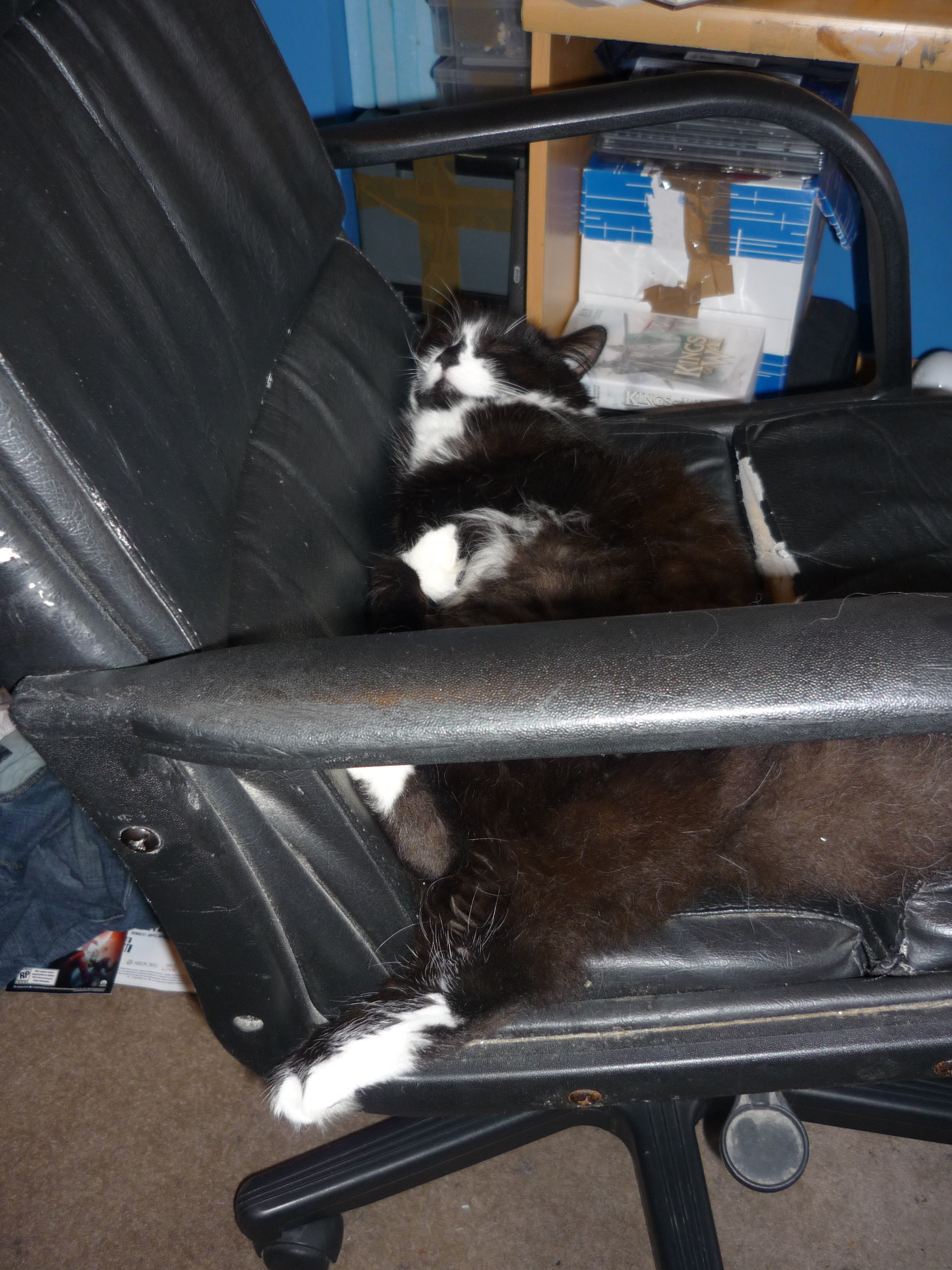
Failing that, maybe it’s not too late to switch careers to science and dedicate the rest of my working life to enabling species change so that I can become a cat.

human to cat - bp images

Why I’m not great with doctors

Standard

“Illness is the doctor to whom we pay most heed; to kindness, to knowledge, we make promise only; pain we obey.” – Marcel Proust

I made a promise to myself that I would blog once a week and as my mother has already demanded to know where this week’s blog is, skipping out isn’t just cheating me but there is a slight chance others may notice (aside from immediate family). However, I apologise in advance. This is unlikely to be my most interesting, well-written or lucid post but I have an excuse and it was either this or an old piece of prose about a broken heart.

My excuse is I have been really ill all week, now don’t worry this isn’t going to be a post like ‘The forlornest looking lampshade‘ where I shared every gruesome detail of my last illness. For one thing, there’s less comedy value in current bout of sickness. For another, much as I love to make the world all about me at the best of times and even more so at the worst of times, I accept that the details probably aren’t that interesting a read.

Anyway, without the gory details, suffice to say my illness has been of the sort where looking at a screen for more than an hour or two has been unimaginable until today and up until now I’ve prioritised screen time for work related duties, feeling not just a little guilty about my lack of paid duty effectiveness.

P1010259That was the excuse. This is apparently the blog post:

I promised my mother I would go to a doctor if I still wasn’t better by today so I did sort of try to keep to my word. I wasn’t very succesful and probably could have tried harder but I made a few calls trying to register as a patient or arrange an appointment with an English-speaking doctor*. By the time I found a likely couple of leads it was too late as I realised neither worked on Friday afternoons.

My friends at work were emailing to ask why I hadn’t gone to a doctor yet and I explained I was on the mend and it was now quite unnecessary. I have been feeling much better this afternoon so this is partially true, but actually this is the longest period of time when I have felt consecutively unwell since I can remember so if I was going to a doctor maybe I should have gone a few days back when I felt rotten to the core.

And why didn’t I? Three equally rubbish reasons.

P1010309

Reason number one

I don’t like going to the doctors for anything other than routine appointments because whenever I have gone feeling awful (like last time I had bad sinusitis) there is nothing they can do for me anyway and I end up leaving feeling I’ve wasted their time.

Reason number two

This is specific to being an expat. I just don’t get how it works here. Some places you are meant to register in advance, some places you just turn up. I don’t understand how it works and I don’t trust myself not to put myself in an embarrassing situation by thinking I’ve made an appointment and going to the wrong place or worse going to the right place but completely misunderstanding that under no circumstances are appointments available for nearly thirty year old brunette women who aren’t Swiss.

Reason number three

The final reason is probably the worst one and that’s financial. Every month I pay a ridiculously high portion of my wages for a sub-standard medical insurance with an excess so high I figure I could only cover it in emergency situations as it would warrant eating up my entire British bank account overdraft.

This means that a simple doctor’s appointment is going to be paid for by me. I have no idea how much, see reason two, but suspect it to be somewhere around 100 Swiss Francs. When my weekly fun budget is currently just 40 of those Swiss Francs sacrificing two and a half week’s fun budget just to be told they can’t help me anyway, reason one, doesn’t really seem worth it.

P1010297

Do you have a point?

No, not really, I just want to say how much I love the National Health Service and wish that the Conservative Government and other detractor’s of the NHS would recognise the value of it. It is absolutely one of the best things about living in Britain. The fact that the US struggled to realise a very poor version of this and yet some people in the UK act as though they’d be happy to just throw our health service away, something Britain’s had and enjoyed for over 60 years, is truly disappointing.

I do not doubt the NHS is flawed, there can be long waiting lists and there’s probably too much bureaucracy, but it is available to everyone, even those with private health care who don’t need it. It is wonderful and works exceptionally well in emergency situations when people really need it. It is also staffed by some really hard-working and dedicated individuals who take all the criticisms and carry on anyway because they know how important it is.

I hope people will continue to fight for the UK’s NHS because if we let it go then it’s gone. That’s the problem with giving things away, you can’t then demand them back when you finally realise how much they meant to you.


*French is improving and conversations with french receptionists are one thing but I don’t trust my language skills enough not to accidentally tell a doctor I have wings growing out of my back when trying to describe eye-pain and then getting sent to a different kind of doctor entirely.
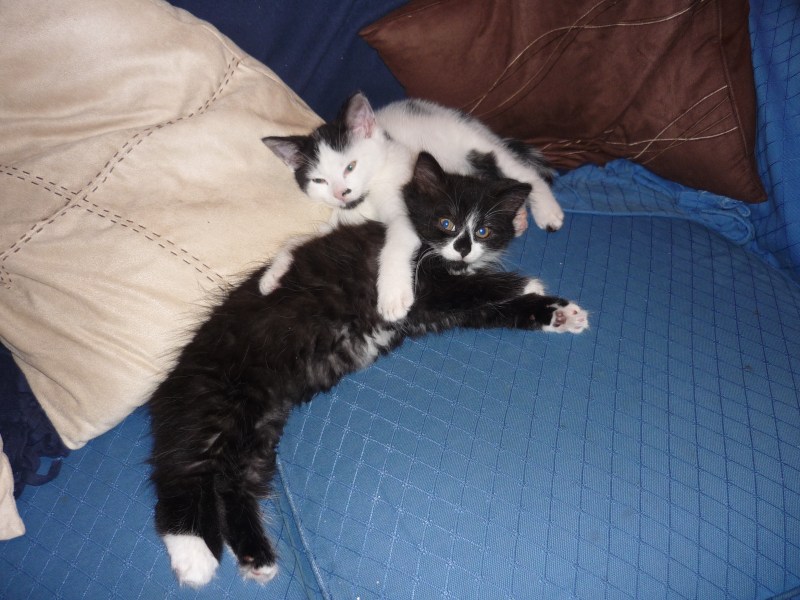
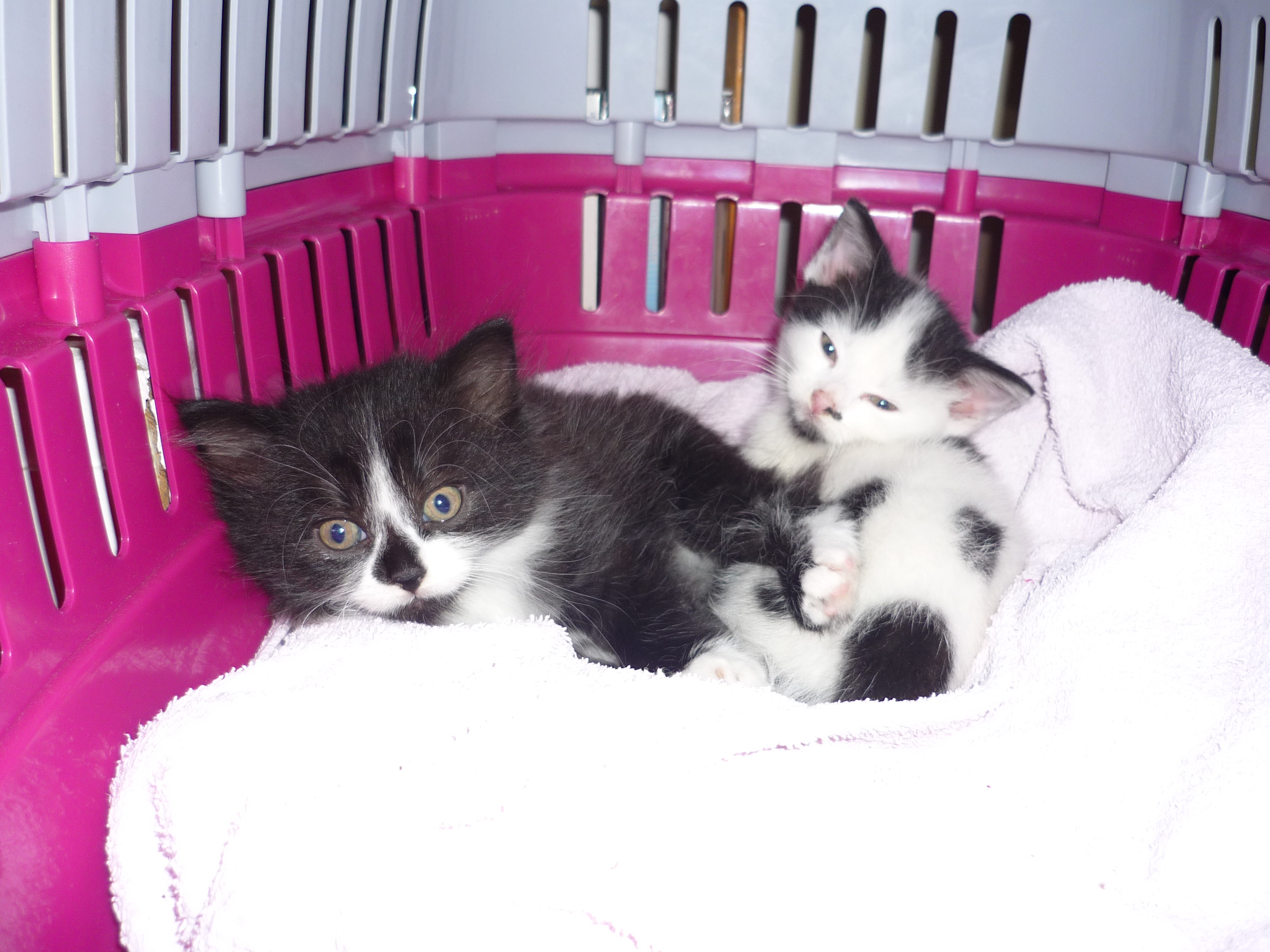
P.S. I had no appropriate images and lack brain power for wonderful computer stick men drawings so just added photo of the cats when they were kittens so that there’s something nice to look at.


The zombie wedding I wasn’t allowed to have

Standard

The engagement and wedding fever

In September 2013 my partner finally gave into familial and societal pressure and after six years together he decided to put an end to my wandering ways, came out to join me at the end of a financially-insensible, three-month, unpaid internship in Cambodia and proposed.

He tells the story slightly differently, something about a romantic setting at one of the wonders of the world (Angkor Wat in Cambodia) blah-de-blah…*

We returned to the UK together: him, one box of jeweled anxiety lighter and me, one bit of bling heavier.

I thought we might be allowed a teeny amount of time to revel in our new found enfiancededyness (should totally be a word) and bask in the happiness of knowing our friends and family can relax and enjoy our betrothal.

However, it turns out that isn’t what happens once you get engaged. What happens is that all that pent-up longing to see us get engaged mutates into a monstrous level of excitement about all things weddingy. Within a week of return I must have been asked approximately 10,000 times when, where and how the wedding was going to take place and who would be invited.

Finding it a bit overwhelming I enlisted the help of some avowed wedding-unenthusiast friends who helpfully suggested a strategy to combat marriage fever. I was to come up with as many ridiculous wedding plans as possible until people got so frightened I was serious they stopped asking me about it.

Of the unsuitable wedding ideas considered, the zombie theme was undoubtedly my favourite and I put a lot of thought into the details to make it convincing.

The zombie wedding plans

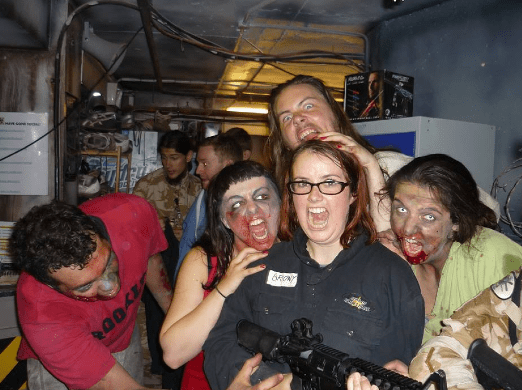
Zombie weddingThere would be utilitarian themed wedding invites scraped together from the kind of bits of cardboard you’d find breezing around an apocalyptic London where no-one has time to go to Paperchase anymore.

These would include the necessary logistical information but also references to the need to band together to increase our chances of survival.

I envisaged the wedding itself as a fairly non-eventful affair except that at the part when the Priest invites anyone to declare any reason why we couldn’t get married some ‘zombies’ would bang loudly on the church door and groan.

The service would conclude and guests would be carefully chaperoned to the wedding reception venue by Shaun of the Dead inspired groomsmen armed with cricket bats and old records.

Serving staff would already be undead (I was thinking actors, students or some other bunch of reprobates) with chains to limit their movement. You can take a drink but would have to try not to let them bite you.

For our wedding breakfast we could have provided packets of Wotsits, tins of cold baked beans, mouldy cheese, beer cans and other larder items scavenged from deserted houses. Decorations could have been paperchains fashioned out of blood spattered old newspapers and stubs of candles in old wine bottles would have provided suitable Armageddon-esque romantic lighting. All in keeping with the concept, and cost-effective too.

Rather than the usual party games for tables of strangers, guests would be provided with scrappy pencils and recycled paper and asked to plan their escape from the reception to a nearby safehouse and there’d be a competition to come up with the most inventive way of killing zombies with only the contents of the room available to them.

Photos would have been in two stages. Initially guests in their nice outfits and looking their best. Then we’d have had a face painter whose job would be to gradually transform guests into zombies. Later, another round of photos and if guests happened to be drunk and covered in Wotsit dust by this time then so much the better.

By the end of the night I imagined everyone having been bitten and transformed into a zombie so that party time could be everyone dancing to Thriller on repeat, drinking brain cocktails, eating cake shaped like a decomposing body and occasionally shouting out ‘brains’ to make the zombie bride and groom try to eat each other.

The reaction

My dad, reasonably confident I was joking, entered into the spirit of my zombie wedding idea and at an engagement party took great pleasure in sharing plans with aunts and uncles. He was pretty convincing and the measured looks on their faces as they tried to weigh horror at such an idea against likelihood it was a joke was highly entertaining. Except for Grandma who accepted the concept without question, laughed that she wouldn’t have to dress up and promptly settled herself into an armchair with a glass of sherry.

I got so carried away with the idea of my joke wedding that I managed to convince myself that any alternative would be a disappointment. When it became apparent it was less of a joke than it had initially seemed I received strong feedback from people, fiancé included, that an undead wedding really wasn’t a great idea.

I realized I could maturely respond to wedding excitement had two options:

1) I could find a new fiancé, friends and family that might be onboard with the wedding/judgement day of my imagination.

2) If I wasn’t allowed that wedding I’d have to engineer a situation whereby any wedding seemed wholly unfeasible.

I chose option number two, moved to Geneva and made the poor fella quit his job and follow me to one of the most expensive cities in Europe where we couldn’t afford a wedding (zombie or otherwise) even if we wanted to.**

How d’you like them (rotten) apples, eh?


*This is a good test to see if the fiancé actually reads my blog or just pretends to and if he does read it how much trouble I will get in for writing this!
**Please note I may or may not have moved to Geneva for reasons other than avoiding/stalling my own wedding

Judge, Jury and Executioner

Standard

“I think fish is nice, but then I think that rain is wet, so who am I to judge?” – Douglas Adams, The Hitchhikers Guide to the Galaxy

I am a huge fan of the Humans of New York (HONY) website (you can also follow the page on facebook for feel-good hits throughout the day). Brandon, the man behind HONY, takes a photo of a random individual and then he asks a few probing questions to get a snapshot of that person’s story. The images instantly evoke one idea, but the brief snippet of dialogue calls us to question our preconceptions and think a little bit more about the human behind the image.

From the snappily dressed businessman, to the homeless man to a middle-aged couple everyone has their story to tell and it isn’t necessarily reflected by their outward appearances. HONY is a brilliant blog that reaches an audience of millions and is teaching all of us to think before we judge.

I believe it comes naturally to judge people, we can’t help it. But we can try to overcome this tendency by questioning why we do this.

We are human and we respond with a variety of emotions, that we don’t consciously control, towards those around us. These feelings have been shaped by our experiences and the societal norms we unconsciously absorb every day.

So if we feel uncomfortable if someone asks for our number that’s probably because we have had a bad experience in the past. We then project that recognition of a negative encounter onto a new situation. If we feel awkward when a homeless man asks us for money it’s because we feel having a home is important and their approaching us makes us question why some people don’t have this.

If someone is constantly late or fails to show up to a meeting we may decide they are unreliable. We are interpreting their actions by what is important to us. In this case keeping to an agreed appointment is important to us and therefore we negatively judge anyone who does not attribute the same importance to this. Late again - BP image

But that same person, that regularly flakes out on you, may also be someone who would drop everything, including bailing on existing commitments, to be there for you if you really needed them. And this may be a trait we also rate highly even though it contradicts the first.

We may think a person is wonderful because we respect X, Y and Z characteristics and therefore admire those in others or we may think someone is terrible because of traits A, B and C that we don’t value. Someone else might think aspects A, B and C are much more admirable than X, Y and Z.

There is no right answer as to what’s better, it’s simply personal preference. Judgement is, therefore, entirely subjective.

It’s easy to judge others. It’s easy to think so-and-so at work is stuck up and looks down on us, or that someone is unnecessarily rude to us, or that another person who makes us tea on a daily person is the best person to ever walk the planet.

But judging others says more about us than them. If we think someone is looking down on us then that reveals our own insecurities by suggesting we think they have something to look down on. If someone is rude to us we should think about why it bothers us or what has happened to them to cause them to be so rude rather than marking them down as a ‘bad’ person. If we think it’s great that someone makes us tea it’s because we really like tea (yes, I am living up to the English stereotype) and value their thoughtfulness in thinking of our needs.

A friend, also comparatively new to Geneva, told me about an incident when she was walking home alone one evening, along an almost deserted street. She was approached by a slightly drunken man who asked for her phone number. She told him she had a boyfriend but he persisted anyway saying he just wanted to talk. When she questioned him on this he admitted with a smile that he didn’t just want to talk. When she still refused to give him her number he asked her if he could just have a hug instead.

She told me that her first thoughts were ‘absolutely not, who was this person, what if he tried to assault her, or steal from her’ but then she opened herself up to the idea that maybe he was just another human being, like her, who was just looking to make a connection. And so she agreed.

She said the hug was so warm and full of kindness that he hugged her as though she were an old friend he had known forever. And then he left. Without having taken any of her belongings, without attacking her and without asking again for her phone number. Months later and she still remembers how wonderful that hug felt.

If we are aware of our tendency to judge then maybe we can try to check that natural feeling and open ourselves up to the idea that every single one of us is a unique and fascinating person, subject to their own experiences and with their own stories to tell that has shaped who they are. This planet is a vibrant tapestry of interesting people from every walk of life and if we could be less judgemental then maybe we could give these people an opportunity to enrich our lives.

(Please note I take no responsibility for anyone who opens up their lives to a complete bunch of nutters unless that person is also a nutter and now has lots of nutty friends in which case I will take full credit.)

The unexpected surprise of an early morning

Standard

“Morning is wonderful. It’s only drawback is that is comes at such an inconvenient time of day.” – Glen Cook, Sweet Silver Blues

Generally I’m not a morning person and I usually like to start my weekends in a lazy fashion, with a bit of a lie-in and then lounging around over a leisurely breakfast watching some sort of trashy tv (and since Netflix is now available in Switzerland a whole new world of trashy options has been opened up for me – hellooo Gossip Girl!).

But this Sunday I had to come into work for an important meeting, which takes place every six months and always involves at least one day’s work over the weekend. This involves not only getting up earlier than I would usually do on a weekend but actually getting up earlier than I would usually do if I were going to work, which for a non-morning person comes as a bit of a shock.

So last Sunday morning my alarm went off far too early and I bumbled around the flat with bleary-eyes, trying to find my toothbrush (charging in the kitchen) and keys (eventually located in another work bag) so that I could actually get out of the flat, without having to climb out the window, with reasonably fresh breath.

Finally, I was ready to leave, but still in plenty of time despite the minor setbacks, as I got up extra extra early (for me). It’s an important meeting and I didn’t really want to leave anything to chance so I factored in time for the toothbrush tracking, key-locating and about 10 other potential mini-mishaps.

Venturing out of the flat I released my bike from it’s cave* to ride to work in the early morning light.

Riding my bike to work is one of my favourite moments of every working day. There is something incredibly liberating about riding a bike, especially when it comes with the added bonus of the smug awareness that it’ll get me to work faster than the bus.

Actually let me just amend that. There is something incredibly liberating about riding a bike in a bike-friendly city like Geneva, which has on the whole been a positive experience (aside from one minor, albeit expensive, brush in with the law for running a red light see ‘Daring to dare but don’t dare to run a red light’). Cycling in Phnom Penh, Cambodia, was liberating but more in the sense of an almost-liberating-myself-from-the-land-of-the-living, dicing-with-death, experience navigating a treacherous path amongst trucks, jeeps and tuk-tuks loaded up with people and produce, who may or may not have been driving on their designated side of the road, if on the road at all. 

But riding to work on a Sunday morning in Geneva, with barely a whisper of traffic, was an entirely pleasurable experience. Whizzing through the almost deserted streets felt kind of magical. There is something rather wonderful in knowing that you are awake and active when most people aren’t. And being up and about, on my way to an important meeting, hours earlier than I would probably even have woken up under more typical Sunday circumstances, felt like something to be proud of in itself. It was an unexpectedly enchanting way to start the day.

When I was studying for my law diploma in London, exams would happen once every three months on a Saturday morning and every time I would experience this same strange sensation. The heart pumping from the adrenaline needed to accomplish an upcoming event (then the exams, Sunday pulling off the meeting without a hitch), added to the buzz of being almost alone in a normally busy town (and not just for the opportunity it afforded to pretend a zombie apocalypse is underway) topped off with the somewhat conceited self-satisfaction of knowing that by the time I’d normally be ready to face the world, I’ll already have achieved something.

I’d like to say that I’ll repeat the experience voluntarily by setting my alarm for 6am on Saturday to go for an early morning run and revive the mystical circumstances. But…But…But I don’t think you can force these things… and I wouldn’t want to disturb the cats…and I would probably do myself some sort of an injury setting off at that time. And any number of other excuses to explain the fact I just don’t want to.

Magical morning experience over mooching about until noon? I’ll take the mooching thanks. I already admitted I wasn’t a morning person.


* I really love that in Geneva cellars/garage/general storage-holes are referred to as caves.

Unstuck in time

Standard

http://www.youtube.com/watch?v=haV2ZflrSMY

This week I have been trying to plan a number of international calls for my boss. I have a useful device on my computer where I can easily compare the times of our office with those he regularly connects with around the world. So usually this is pretty straight forward, except that I have been trying to coordinate calls that will happen after the clocks have changed in Geneva. In some countries clocks don’t change at all and in others they don’t change when ours do. And for some reason trying to figure this out makes my brain bleed.
I can check a hundred times that in a particular week Geneva will be an additional hour ahead of New York but when I look at the time scroller I can’t compute the adding on of that extra hour and have to start again. It’s like a clock whose hands are sweeping past the minutes of its face and I can’t get it to slow down enough for me to figure it out.
P1000461The concept of time is a strange thing and I’m not 100% sure that I believe in it as I am supposed to. A month or two back we read Kurt Vonnegut’s ‘Slaughterhouse-Five’ for book club. The book is told in a non linear fashion and centres around the character of Billy Pilgrim who becomes ‘unstuck in time’.
I read the book and listened to the club debate whether it should be classified as science fiction, whether Billy should be considered to be suffering from post-traumatic stress disorder or whether the unsticking in time is simply an old man reminiscing. Being the somewhat simple person that I am I read it and just accepted the time travel as a perfectly normal aspect of the narrative.
To be honest it kind of made sense. I think I know that time moves in a regimented, chronological, one-minute-follows-another-minute sort of way, but that’s not how we experience it. So I wonder if the concept of time that I think I know is just one version of the reality of this?
I’ve been experiencing déjà vu quite a lot recently, that sense of half-remembered names and faces that I’ve already encountered some time ago. I looked online and found a lot of simple(ish) scientific explanations for déjà vu. But what if the explanation is even simpler, a moment or experience feels familiar because you actually have seen or experienced it before at another time?
Perhaps time is much more like a wheel within a wheel than the straight line we think, and every so often whilst spinning around one wheel we might get teeny glimpses of something that’s on another wheel we aren’t supposed to be circling yet? Like the fleeting moment of identifying a face in the crowd when on a ride at a fairground before the image is snatched away.
When they first turned on the large hadron collider at CERN, which I visited last weekend, there were fears that it would create a black hole and destroy life as we know it. The scientists involved said that was ridiculous and wouldn’t happen but when asked what would be the outcome of their work they didn’t, and still really don’t, know what the effects might be. Nerds (myself included) across the world are mostly keeping our fingers crossed for the coolest possible scientific outcome, that is to say time travel.
LHCbI like time travel stories and the fiancé and I have just decided to start watching all the rebooted Doctor Who (from 2005) from episode one, series one. I love the show but it always leaves me with a lot of questions.
Like how is anything ever a surprise for the Doctor? For example when he meets a potential new companion, how does he not instantly recognize them from future memories? When he’s in a sticky situation why can he never remember how to get out of it? And also, why are his companions always pretty young women? My constant questions become words that jangle in my head and are probably evidence of my tendency to over-think things rather than just go with the flow but the whole concept of time travel is just a circle in a spiral that keeps on spinning!
The idea of being able to visit different ages and different periods in history is definitely appealing. I’m pretty sure I’d make an excellent Tudor and would obviously love to see if hover cars ever do become the reality futuristic films promise.
OLYMPUS DIGITAL CAMERABut if you had the ability to time travel would you be able to avoid the temptation to visit your own history? If you could change the things you are not proud of or glimpse into the future to see what happens, would you? And if you could time travel and could make the odd adjustment here and there would this change who you are? If you knew your future would you experience your life differently?
And if time isn’t altered so easily and isn’t so much a line as a circle would we, like Billy Pilgrim, live our lives on a constant loop, that never really ends or begins but rather lurches from one key moment to another? Would life become a trap, a nightmarish existence of endlessly reliving every moment?
Would I at least be able to figure out what time zones Geneva and connecting cities are in, relying on future successes, or would I have to experience the pain of figuring this out for an eternity?

10 reasons not to be afraid of feminism

Standard

“I call myself a feminist. Isn’t that what you call someone who fights for women’s rights?” – The Dalai Lama

“We cannot all succeed when half of us are held back” – Malala Yousafzai

Feminism seems to be something that sparks a lot of heated debate although I’m not really sure why as essentially it’s just about equality between men and women and I think that’s hard to argue against. But to help clarify things I thought I’d present ten reasons why people don’t need to be afraid of feminism.

1. Not all words ending in -ism are bad

Yes ‘Nazism’, ‘Stalinism’ and ‘terrorism’ are definitely some bad -isms but this doesn’t make all words ending in -ism are inherently evil. If you do google-search for words ending in ‘ism’ you will probably find more rubbish examples than good ones, but without ‘ism’ we couldn’t have ‘heroism’ or ‘idealism’. Heroism (art by B. Potts)

2. Feminism remains necessary as people are still treated differently because of their gender

Even just looking at things from a Western perspective although women may have equality in theory it doesn’t always amount to equality in practice. I could go on about female representation in public spheres like the government, legislature and judiciary but that would probably add another thousand words to this post so I’ll just invite you to check out Laura Bates’s everyday sexism project to get an idea of why feminism is still required in the so-called developed world. Every woman I’ve spoken to about this has at least one story of when they have been made to feel uncomfortable by a man in a way that wouldn’t have happened had they not been a woman.

Some men, and definitely not all, because most men I know wouldn’t dream of behaving in this way, but some men think it’s alright to objectify women, to grab their bottoms, to shout obscenities at them from moving vehicles, to comment on their tits and genuinely treat them as objects for their amusement. I suspect that some of the men that do this would actually be quite shocked by how much this sort of thing can really get under a person’s skin and make us feel uncomfortable. So a comment on our booty might be meant kindly but please forgive us if we react badly, from our experiences of this sort of thing happening quite frequently we are likely to be more sensitive about these things and, perhaps not wholly surprisingly, we will take personal comments well… personally.

This kind of unwanted attention is more likely to happen to women but yes this does also happen to men. Behaviour that intimidates, harasses or upsets anyone in this way, whatever gender they are, isn’t acceptable.

3. Feminism isn’t about hating-men

Being a feminist doesn’t mean you hate men. It’s not like racism (another bad -ism) where you want to assert the superiority of one kind of person over another, so being a feminist doesn’t mean you believe in female superiority and eagerly await the subjugation of all men to the complete domination of women.

Alright some people who call themselves feminists might want that but they have sort of missed the point and shouldn’t be considered representative of all feminists. Feminism is actually about wanting gender equality for both men and women.
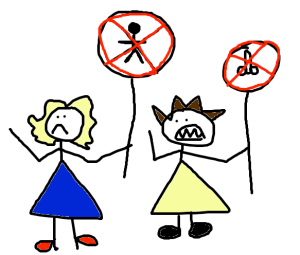
Men hating (art by B Potts)

4. Feminism doesn’t mean all men are rapists

Feminism often focuses on rape because this is a problem, it happens far too frequently, often goes unreported or isn’t always taken as seriously as it should be. Feminists highlight the dangers of rape because it’s a terrible thing no-one should have to experience, it doesn’t mean feminists think every man is a rapist.

A bit of a tangent about the nail varnish thing…

There was a bit of fuss recently after some chaps invented a nail polish that changed colour when dipped in a drink that had been spiked. At first everyone thought this was great because helping people not be raped is surely a good thing. Then there was a bit of a backlash from some of the angry feminists types who tend to put people off the whole thing, who were getting up in the grill of the inventors faces and saying things like ‘how dare you assume rape is just women’ and ‘why should the onus be on women not to get raped, why not figure out how to stop people thinking rape is okay’.

I would like to respond to these two points. Firstly why assume men wouldn’t wear nail varnish and even if they don’t want to that doesn’t stop this being useful. If you discovered a cure for cancer that could only help ginger-haired people but couldn’t cure cancer for everyone it’d be pretty dastardly to say to ginger-haired people sorry you can’t have this until we’ve figured out a fix for everyone.

To the second argument it’s not like the inventors were saying ‘hey it’s okay to rape anyone who doesn’t use our nail varnish’ it’s simply that they thought they could do something to address a serious problem which sadly exists in the actual world we live in as opposed to the utopia we’d all like where rape doesn’t happen. Saying the inventors of rape-deterrent nail varnish are saying it’s up to women not to get raped is like saying I should be able to leave my bike unlocked in Geneva outside without anyone taking it. Yes I should be able to leave my bike unlocked because stealing my bike would be wrong. However as some people would steal my bike whether or not I think it’s wrong I’m grateful someone invented bike locks.

5. Admitting a need for feminism doesn’t mean pretending there are no other problems in the world

Sexism happens. It’s not the only awful thing that happens in the world. However the existence of other terrible things doesn’t mean sexism doesn’t exist and that it isn’t a problem that shouldn’t be addressed. It’s not a competition, it’s just about trying to improve the world in whatever way we can.

Feminism is about addressing discrepancies between genders and achieving real gender equality will help some people. It won’t solve poverty, famine and disease. But we aren’t ranking these things. Otherwise we would all have to agree on the one most single awful thing in the world and say we can’t even consider other issues until this was resolved. It would be like saying the police shouldn’t investigate kidnap cases until all murder cases have been solved.

Sadly there are many bad things in the world, happily there are lots of good people that want to work in different ways to try and make things better.

6. Feminism doesn’t mean women can never wash, shave, put on nice clothes or make-up

Feminism means women are free to make a choice about whether they wash, choose to shave, what clothes they wear or whether they want to apply make-up, and that no-one should feel they have to do these things just for the benefit of someone else. Although, actually, all genders should try and wash occasionally, for the benefit of your fellow humans who otherwise have to smell you.

Just last night I was painting my nails whilst reading a book on women’s human rights. This doesn’t make me less of a woman or a rubbish feminist because first of all, it’s not an either/or situation and second of all, I believe it’s up to me to be a ‘woman’ in whatever way I choose. Sometimes that involves painting my nails, sometimes it involves bumming around in jogging bottoms all day. It’s my call.
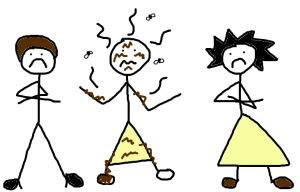
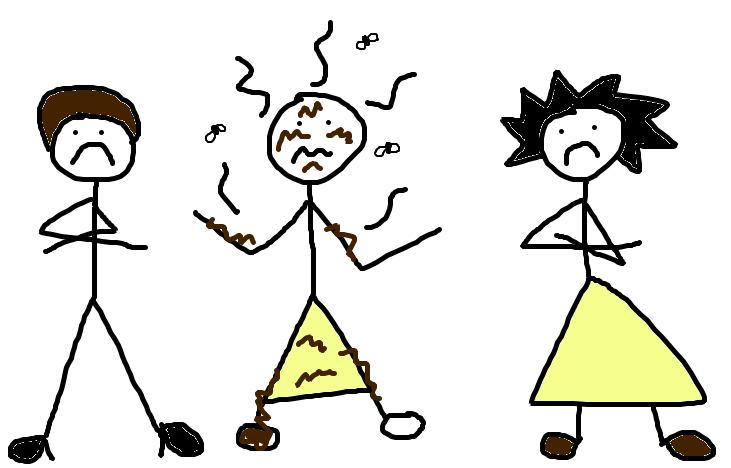
Not washing (art by B Potts)

7. Feminism isn’t about denying bad things happen to men

Feminism is about levelling the current power imbalance between genders. It tends to focus on women because on the whole the power imbalance is against women. However it doesn’t mean denying that issues which more often affect women than men, also affect men and can be perpetrated by women.

For example there are serious issues about disbelief of male victims of rape or domestic abuse by people who don’t believe this could happen. This isn’t something to laugh off, it’s a serious issue and changing attitudes towards these victims is all part of feminism.

Someone suggested that feminism should be renamed equalism so as not to irritate people so much. I see their point in that feminism is really an issue of equality it’s just that if we don’t give it a gendered terminology then it wouldn’t necessarily be clear as to what feminism is about.

I’m a humanist in that I believe everyone should be treated equally regardless of gender, sexual orientation, race, ethnicity, religion or any other category you want to throw in there. I’m also a feminist because feminism is addressing one of these areas of discrimination and if I say feminist then we all, more or less, know what I’m talking about.

8. Feminism doesn’t turn all women into victims

Feminism isn’t about the victimisation of women, it’s not about saying women can’t do anything for themselves and that they will always be oppressed by men. It’s about acknowledging there is a problem, raising awareness of the problem in the hope that it might affect change and ultimately working together towards a world where we can say feminism isn’t necessary any more. Feminism can actually be quite empowering by helping people of all genders to realise they shouldn’t have to put up with gender biased behaviour that demoralises and demeans them.

9. You don’t have to be a woman to be a feminist

As Emma Watson put it in her recent speech on feminism for the UN “Men – I would like to take this opportunity to extend your formal invitation. Gender equality is your issue too.” There are already a lot of pretty cool men who would identify themselves as feminists, including: Patrick Stewart, Joseph Gordon-Levitt, Ryan Gosling, Prince Harry and the Dalai Lama. 

As a lot of problems of the sort reported on everyday sexism stem from the way men treat women then actually we need more men to step up and make it clear that they think treating women as anything other than human beings is not okay. The more men there are acknowledging the need for gender equality the less feminism can be accused of being a vehicle for angry women to rant about pointless issues (which isn’t really what it’s about at all).

Equalism (art by B. Potts)

10. Feminists can take a joke

Some people think feminists can’t take a joke but that’s simply not true, provided your joke is funny. If your joke is highly sexualised about me and makes me and others in the vicinity uncomfortable, then it’s not really a joke. Jokes about rape are also never going to be funny, there’s a reason why people groan when such jokes are told and that’s because they are awful. Those telling them are going more for shock factor than comedic value and if that’s the best they’ve got in their comedic arsenal then maybe leave the joke telling to actually funny people or look up some new material online.

And one for luck…

11. You can still open a door for a woman without being anti-feminist

There’s no reason for common courtesy to go out of the window just because women want equality with men. No feminist is going to get mad because a man opens a door for her, just don’t get upset if a woman also wants to open a door for a man. You can still be nice to someone without trampling all over them and there’s no need to make this a gender thing. Surely it’s nice if you hold the door open for whoever is behind you or struggling with an armful of books or whatever, regardless of gender.

Opening door (art by B Potts)

The virtual unreality?

Standard

“Reality is merely an illusion, albeit a very persistent one.” Albert Einstein.

A friend referred me to an article about a woman who spent three months convincing her friends and family that she was backpacking around Asia, when in fact she never actually left her apartment. She said that “My goal was to prove how common and easy it is to distort reality. I did this to show people that we filter and manipulate what we show on social media.”

What’s interesting about the story is not so much the deception of it all but the lack of shock that she could actually pull something like that off. How she did it seems pretty straightforward, why is perhaps another matter.

We all choose to present ourselves in a certain way and make umpteen decisions on how we do this on a daily basis without even thinking about it. For example, we choose what clothes we want to wear when we meet certain people, we retell an event a bit more vividly than we actually remember it or we engage in certain conversations to make a better connection with others. It’s not that we are necessarily misrepresenting ourselves so much as presenting one version of the reality that is us to an audience.

In the same way we might answer ‘I’m fine’ to the question ‘how are you?’ or smile for a photograph we know is being taken even when having a truly awful day. At these times we are more consciously presenting a slightly less genuine version of ourselves. So the idea that we twist the perception of the reality we present to others isn’t new. What is new is how much easier it is to do this on a much larger scale with the multitude of social media options available to us.

If you only took everyone at face value of their facebook pages you’d be led to believe that everyone is constantly experiencing a wealth of fantastic things from amazing parties to random items in supermarkets to adorable pet moments to amazing adventures.

What you don’t always get is that contrary to the smiling party pictures the happy-go-lucky attendee pictured were wishing she’d stayed at home to catch up on the latest Doctor Who. That the fascinatingly shaped carrot amongst the vegetables was the amusing perk of a long and tiring day and an hour trudging around the shops looking, and unable to find, the right kind of flour. That two seconds after the lovely cat photo was posted the owner then spent 40 minutes chasing said cat round the house to get it to give up the half dead mouse it had just brought in. That the amazing adventure mentioned is contrary to all those less than amazing non-adventures, that haven’t been shared as status posts, sat at home in front of the tv.

Not that I meant to say every happy image presented is a lie and secretly we all lead very miserable lives with no real joy to be found anywhere, my point is more that the moments we choose to share have been selected by us to present a certain impression. Not necessarily a happy impression, there’s many a ‘worst day ever’ tweet, but a somewhat distorted image of our reality.

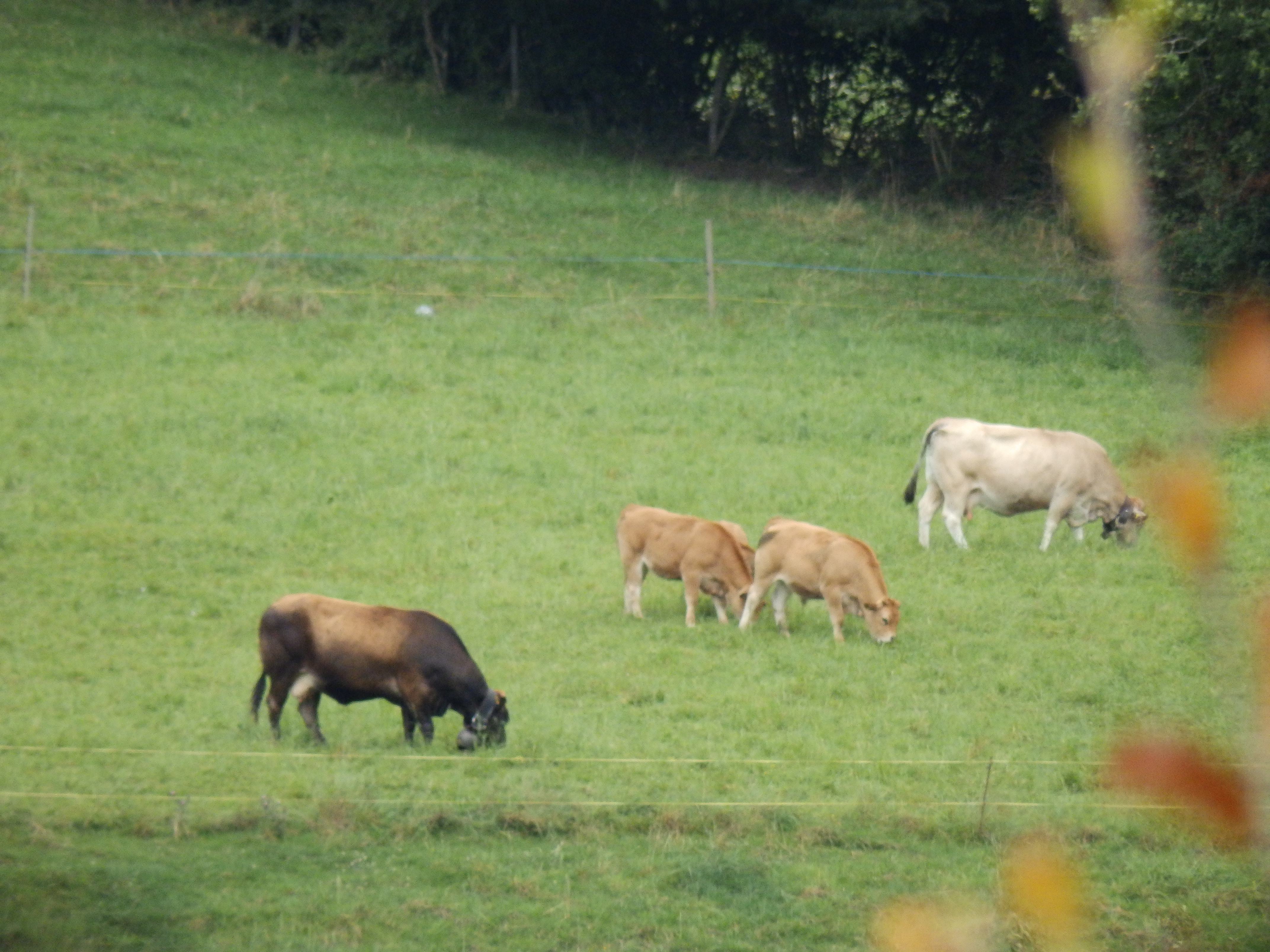
Although most of us don’t go as far as faking an epic adventure abroad over a period of several months. Or do they…? Perhaps I never left London at all and am just hiding out in my Greenwich flat taking pictures of cows pretending they are special Swiss cows and photoshopping myself into pictures with mountains in the background hoping no-one has the geographical ability to identify the mountains pictured as Himalayas rather than Swiss Alps?

Swiss cows or just cows?

Swiss cows or just cows?

If we all know that social media is to be taken with a pinch of salt then it doesn’t really matter if we want to use it as an opportunity to present the kind of person we want everyone to think we are. If we accept that online updates are more qualified than absolute then there’s no real risk provided we make the time to scratch beneath the surface for those we really want to know. The problem is when we get lazy and become content with clicking a like button here and retweeting there without making a real effort to engage with those we care about.

I was talking to my other half the other night about the perils of social media. My argument was that as technology gets ever cleverer and makes our lives easier by doing so much for us including human interaction it may start taking away the humanity from us; in that the easier it becomes to communicate online the harder it is to do so off-line. He was proving my point somewhat, by flicking through various web pages on his tablet whilst trying to dispute this, but argued that social media and online communications were our reality now.

He gave several examples of real friendships he’d forged and maintained in the virtual universe that he was unlikely to have made otherwise, He also pointed out that when living away from many friends and family it’s pretty great that you can still feel connected to them and know what’s going on in people’s lives without having to always try and find time for a lengthy phone call. He also mentioned that without the wonders of modern day technology my blog wouldn’t exist.

I grudgingly had to admit he may have a point. Certainly, without the cyber-sphere my blog would be nothing more than an unread journal or an annoying round robin novel issued once a year at Christmas. So I guess the way we communicate and present ourselves online is a reality. Or at least a very persistent illusion.